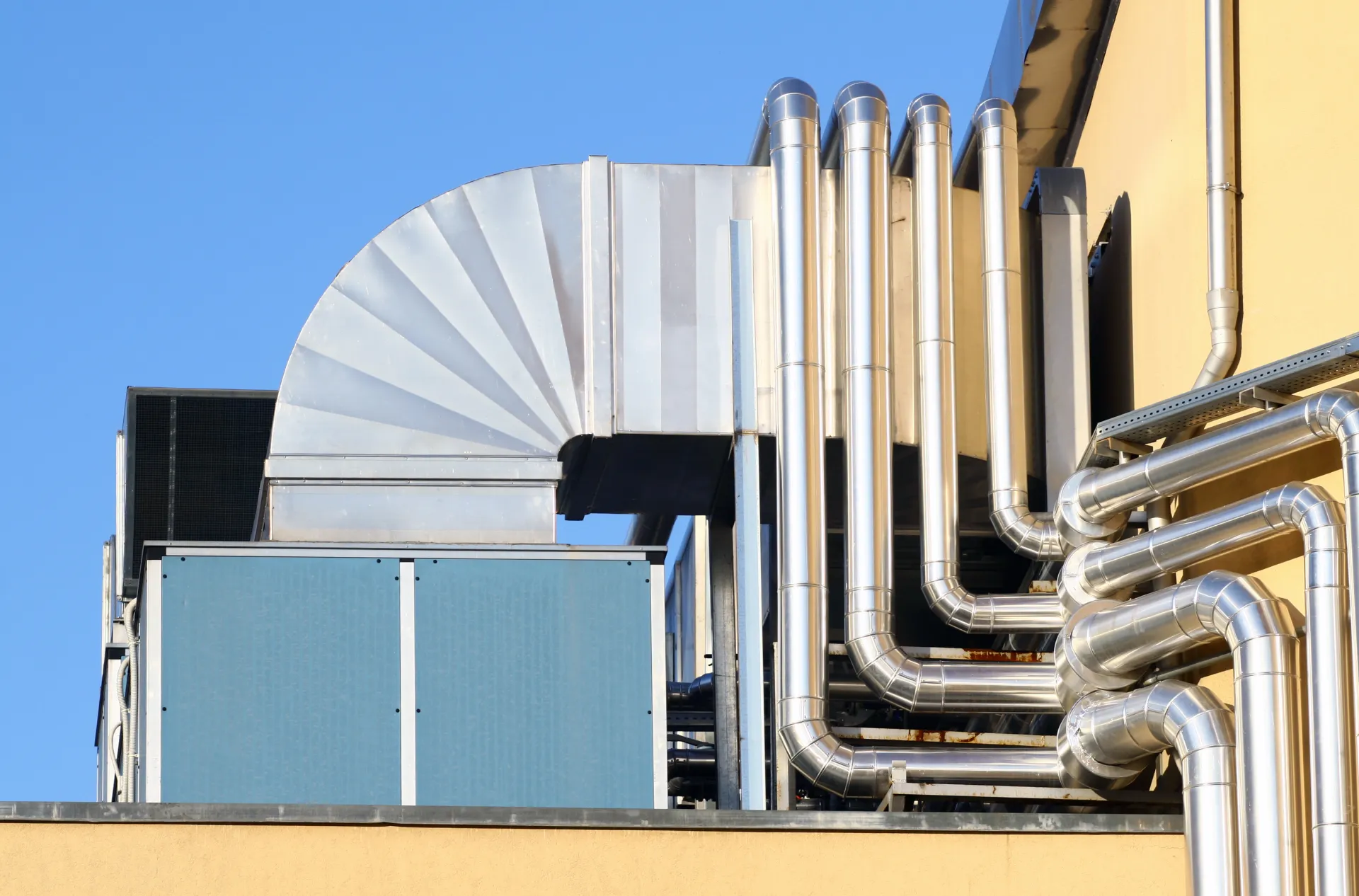
Improving Indoor Air Quality In Commercial Buildings
Strategies and technologies to enhance indoor air quality for healthier, more productive commercial environments.
Comprehensive IAQ Improvement Strategies
Improving indoor air quality commercial buildings Toronto managers prioritize directly impacts occupant health, productivity, and satisfaction. Poor IAQ costs businesses billions annually in lost productivity, increased absenteeism, and higher healthcare costs. Implementing a systematic approach to IAQ solutions commercial GTA teams deploy requires addressing pollution sources, ventilation effectiveness, filtration efficiency, humidity control, and continuous monitoring. Our indoor air quality services provide comprehensive assessment and remediation for commercial and residential properties across the GTA.
Source Control and Prevention
Identifying Pollution Sources
The most effective IAQ strategy addresses contaminants at their source. Common commercial building pollutants include volatile organic compounds (VOCs) from building materials, cleaning products, and office equipment. Combustion byproducts from boilers, water heaters, and emergency generators introduce carbon monoxide and nitrogen dioxide. Biological contaminants grow in damp areas, poorly maintained HVAC systems, and water-damaged materials. Health Canada's air quality resources outline health thresholds for common indoor pollutants.
Material Selection and Procurement
HVAC air quality improvement condo buildings Toronto managers pursue starts with material selection. Specify low-VOC materials during renovations and new construction. Look for products certified by programs such as GREENGUARD, FloorScore, or Cradle to Cradle. When new materials must be installed, increase ventilation temporarily to flush out emitted compounds. Coordinate material installation with after-hours ventilation to minimize occupant exposure. Maintain Material Safety Data Sheets for all products used in the building.
Storage and Handling Procedures
Designate separate, well-ventilated storage areas for cleaning chemicals, paints, and other potentially harmful products. Use spill containment measures and ensure proper ventilation in storage areas. Train custodial staff on proper chemical handling and dilution procedures. Consider switching to green cleaning products that reduce toxic chemical exposure. Implement purchasing controls that limit the quantity of hazardous materials stored on-site.
In GTA condo buildings and luxury high-rises, source control must extend to common areas and individual suites. Underground parking garages represent a significant source of carbon monoxide and particulate matter that can migrate into residential floors above if make-up air systems are not properly balanced. Ensure that garage exhaust fans operate continuously and that corridor pressurization systems maintain positive pressure relative to parking levels.
Garbage chute rooms and compactor areas generate odours and biological contaminants that can spread through the building if exhaust ventilation is inadequate. Regular cleaning of garbage chute interiors, combined with dedicated exhaust fans in compactor rooms, prevents these contaminants from affecting resident comfort. For buildings undergoing suite renovations, property managers should establish renovation guidelines that require contractors to use low-VOC materials, maintain negative pressure in the work area using portable exhaust fans, and seal corridor connections to prevent dust and chemical migration to neighbouring units.
Optimizing Ventilation Systems
Ventilation Rate Assessment
Ventilation IAQ commercial Toronto requirements mandate verifying your ventilation system delivers adequate outdoor air per ASHRAE Standard 62.1 benchmarks. Measure actual airflow rates and compare to design values. Many buildings under-ventilate due to improper damper settings, stuck economizers, or degraded equipment performance. Consider hiring a professional to conduct a ventilation assessment using tracer gas testing or direct airflow measurements. Our Toronto HVAC services team provides comprehensive ventilation assessments for commercial and condo buildings throughout the GTA.
Demand-Controlled Ventilation
DCV systems modulate outdoor air intake based on actual occupancy, reducing energy waste while maintaining adequate air quality. Carbon dioxide sensors serve as a proxy for occupancy, though some systems use more sophisticated multi-sensor approaches. DCV is particularly effective in spaces with variable occupancy such as conference rooms, auditoriums, and retail establishments. Ensure minimum ventilation rates are maintained even at low occupancy.
Economizer Optimization
Air-side economizers provide free cooling and ventilation when outdoor conditions permit. Regular economizer maintenance ensures reliable operation and maximum benefit. Test economizer controls to verify proper sequencing and lockout settings. Clean sensors and check damper operation annually. In humid climates, implement enthalpy-based control that considers both temperature and moisture content to prevent introducing excessive humidity.
Make-Up Air and Corridor Pressurization in High-Rises
GTA high-rise residential buildings rely on make-up air units (MUAs) to provide fresh outdoor air to corridors, which then distributes to individual suites through undercut doors or transfer grilles. This pressurization strategy is fundamental to indoor air quality in multi-unit buildings, as it prevents cooking odours, cigarette smoke, and other contaminants from migrating between suites. However, many older buildings have MUAs that deliver inadequate airflow due to dirty filters, worn fan belts, or failed damper actuators.
A comprehensive IAQ improvement program for any condo tower should begin with verifying that MUA airflow rates meet the original design specifications and that corridor pressurization is positive relative to individual suites. Building engineers should measure pressure differentials across suite entrance doors using a manometer — a reading of 2.5 to 5 Pascals positive in the corridor relative to the suite indicates adequate pressurization. Where pressurization is insufficient, investigate MUA performance, check for envelope air leakage paths that bypass the corridor system, and verify that suite exhaust fans in kitchens and bathrooms are not overpowering the supply air system.
Advanced Filtration Strategies
MERV Rating Selection
Minimum Efficiency Reporting Value (MERV) ratings indicate filter effectiveness. Standard commercial applications typically use MERV 8-11 filters for basic dust control. MERV 13-16 filters capture finer particles including allergens, some bacteria, and larger viruses. Healthcare facilities may require HEPA filters (MERV 17-20) that capture 99.97% of particles 0.3 microns and larger. Higher efficiency filters increase pressure drop, so verify your HVAC system can handle the additional static pressure.
Filter Installation and Maintenance
Proper filter installation prevents air bypass that reduces effectiveness dramatically. Gaskets and seals must be intact and properly positioned. Install filters in the correct airflow direction as indicated by arrows on the filter frame. Establish a regular filter change schedule based on pressure drop monitoring rather than time intervals. Inspect filters monthly during high-use periods and replace when pressure drop exceeds manufacturer recommendations.
Gas-Phase Filtration
Air purification commercial buildings GTA buildings invest in includes gas-phase filtration using activated carbon or potassium permanganate media to effectively remove VOCs, odors, and some combustion products that particulate filters cannot capture. These systems are particularly valuable in buildings with pollutant sources or in locations with poor outdoor air quality. Gas-phase filters require regular replacement and may need specialized media depending on the target contaminants.
Humidity Control Solutions
Humidity Target Ranges
Maintain relative humidity between 30-60% to minimize biological growth while maintaining occupant comfort. Humidity below 30% increases respiratory irritation and static electricity. Humidity above 60% promotes mold, mildew, and dust mite growth. Many climates require both humidification and dehumidification capabilities to maintain these ranges year-round.
Dehumidification Strategies
In humid climates, dedicated dehumidification may be necessary beyond what standard cooling provides. Overcooling to remove humidity wastes energy and can cause comfort complaints. Dedicated outdoor air systems (DOAS) often handle latent loads independently, allowing space conditioning systems to focus on sensible cooling. Desiccant dehumidification provides effective moisture removal in very humid conditions without excessive energy consumption.
Humidification Implementation
Cold, dry climates often require humidification to maintain minimum humidity levels. Steam humidifiers inject clean steam directly into the airstream and are ideal for critical environments. Evaporative humidifiers are more energy-efficient but require rigorous water treatment to prevent bacterial growth. Regardless of type, humidification systems must be maintained according to manufacturer guidelines to prevent microbial contamination.
Toronto's winter climate creates particularly challenging humidity conditions for high-rise buildings. When outdoor temperatures drop below minus 10 degrees Celsius, the moisture-holding capacity of outdoor air drops dramatically. Without humidification, indoor relative humidity in GTA buildings can fall below 15 percent during cold snaps — well below the 30 percent minimum recommended for occupant comfort and health. Residents experience dry skin, irritated respiratory passages, and increased susceptibility to viral infections.
However, excessive humidification in high-rise buildings creates a different problem: warm, moist indoor air that contacts cold window surfaces and exterior walls condenses, leading to water damage, mold growth, and deterioration of window frames and drywall. Property managers must work with their HVAC contractor to establish humidity setpoints that balance comfort against condensation risk, typically using an outdoor temperature reset schedule that reduces indoor humidity targets as outdoor temperatures drop. Monitoring condensation on windows throughout the building provides early warning of over-humidification.
Air Quality Monitoring Systems
Real-Time Monitoring Capabilities
Modern IAQ monitors continuously measure multiple parameters including particulate matter, carbon dioxide, VOCs, temperature, and humidity. Permanent installations provide trend data and enable automated responses such as increased ventilation when pollutants spike. Portable monitors allow spot-checking of specific areas and investigating occupant complaints. Integration with HVAC control systems enables intelligent ventilation control based on actual conditions. Pair monitoring with our HVAC maintenance packages to ensure that system performance matches what the sensors are reporting.
Data Analysis and Reporting
Collecting IAQ data enables evidence-based decision-making and demonstrates compliance with standards. Track parameters over time to identify patterns and trends. Correlate IAQ measurements with occupant surveys to validate perceived air quality. Generate reports for management showing IAQ improvements and their impact on building performance. Use monitoring data to optimize ventilation rates and minimize energy use while maintaining air quality.
Alarm Thresholds and Response
Establish alarm thresholds for key IAQ parameters and implement response protocols. Sudden increases in CO2 may indicate ventilation failure requiring immediate investigation. Elevated particulate levels might point to filter bypass or construction activities. VOC spikes often correlate with cleaning or renovation activities. Define clear response procedures for different alarm scenarios and train facilities staff on appropriate actions.
IAQ Considerations Specific to GTA High-Rise Buildings
Multi-unit residential towers in the Greater Toronto Area face IAQ challenges that differ significantly from typical commercial office buildings. Stack effect — the natural convection caused by temperature differences between indoor and outdoor air — creates powerful air currents in tall buildings during winter. Warm air rises through elevator shafts, stairwells, and mechanical chases, pulling unconditioned outdoor air into lower floors through any available opening. This infiltration introduces cold, dry air and outdoor pollutants while driving cooking odours and other contaminants upward through the building.
Effective stack effect management requires a combination of corridor pressurization through properly maintained make-up air units, air sealing of elevator lobbies and stairwell doors, and weather-stripping of suite entrance doors. Buildings taller than 20 storeys should consider vestibule doors at the ground floor lobby to create an air lock that reduces the driving pressure for stack effect.
Cooling tower drift is another IAQ concern unique to buildings with water-cooled chiller systems. Cooling towers release fine water droplets that can carry Legionella bacteria if water treatment is inadequate. Ontario Regulation 332/12 under the Health Protection and Promotion Act requires cooling tower owners to maintain a water management program that includes regular testing for Legionella, chemical treatment to prevent bacterial growth, and annual certification by a qualified water treatment professional.
Property managers must ensure their HVAC vendor or water treatment contractor maintains compliance with these requirements and provides documentation that can be presented to public health inspectors upon request. Locating cooling tower air intakes away from building fresh air intakes, installing high-efficiency drift eliminators, and maintaining proper water treatment chemistry all contribute to protecting indoor air quality in buildings with cooling towers.
IAQ Impact Metrics
Key Takeaways
- ✓ Source control is the most effective and economical IAQ improvement strategy
- ✓ Ventilation optimization ensures adequate outdoor air while minimizing energy waste
- ✓ Proper filtration removes particulates and should be matched to system capabilities and building needs
- ✓ Humidity control prevents biological growth and maintains occupant comfort
- ✓ Continuous monitoring provides data for optimization and demonstrates IAQ performance
Improve Your Building's Air Quality
Our IAQ specialists can assess your current conditions and develop a comprehensive improvement plan tailored to your building.
Request IAQ Assessment