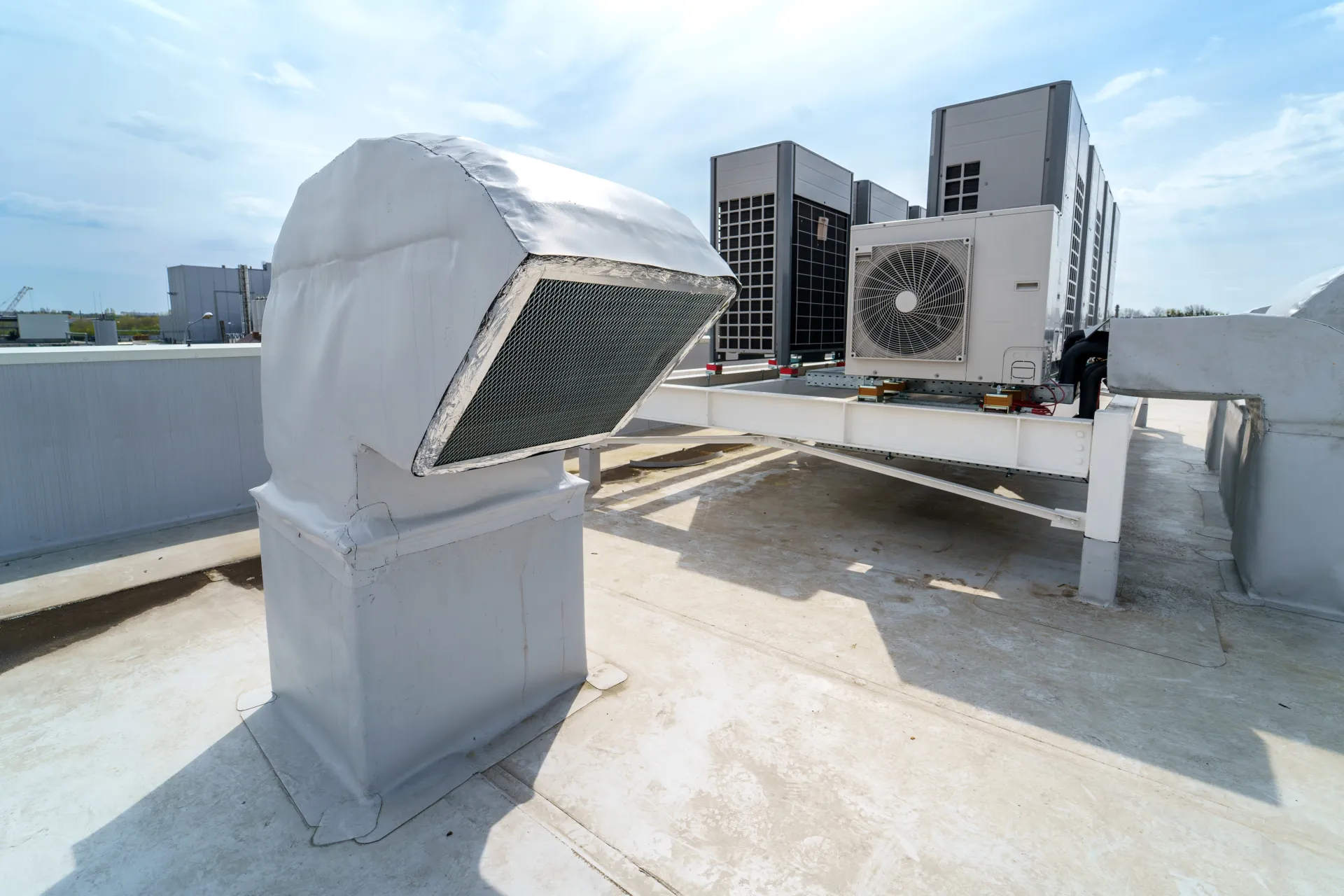
Commercial Ventilation Systems Guide
Expert guide to commercial ventilation systems for proper air exchange, indoor air quality, and regulatory compliance.
Published: January 11, 2026
Reading time: 10 minutes
Proper commercial ventilation systems GTA design and maintenance is critical for maintaining healthy indoor air quality, occupant comfort, and regulatory compliance in commercial buildings. An effective ventilation system removes contaminants, controls humidity, and provides fresh air while managing energy consumption. This comprehensive guide covers ventilation system types, design principles, maintenance requirements, and optimization strategies for property managers and building engineers.
Understanding Ventilation Fundamentals
Commercial ventilation systems provide two essential functions: removing indoor air contaminants and supplying fresh outdoor air. The ventilation rate determines how frequently air within a space is replaced—typically expressed as air changes per hour (ACH) or liters per second (L/s) per person. ASHRAE 62.1 ventilation compliance commercial buildings must meet — ASHRAE Standard 62.1 establishes minimum ventilation rates based on occupancy type, floor area, and expected occupant density.
Natural ventilation relies on pressure differences and thermal buoyancy to move air through openings. While effective in mild climates, natural ventilation provides limited control and is unsuitable for many commercial applications. Mechanical ventilation commercial building Toronto standards require fans and ducts to provide precise airflow control regardless of weather conditions. Most commercial buildings employ mechanical systems to meet code requirements and ensure consistent air quality. Our commercial ventilation systems expertise helps GTA building owners achieve compliance and comfort.
Ventilation systems must address both pollutant sources and occupant requirements. Common contaminants include volatile organic compounds (VOCs) from building materials, carbon dioxide from occupants, and moisture from occupant activities and processes. Effective ventilation design considers all contaminant sources and provides appropriate outdoor air to dilute pollutants to acceptable levels. Improving indoor air quality remains a top priority for GTA property managers.
Types of Commercial Ventilation Systems
Supply ventilation systems pressurize buildings by introducing outdoor air through fans and ductwork. The positive pressure prevents infiltration of unconditioned air and contaminants through building envelope leaks. Supply systems work well in contaminated environments where preventing outdoor pollutant entry is critical. However, they can cause moisture problems in humid climates by pushing moist air into wall cavities.
Exhaust ventilation systems depressurize buildings by removing indoor air. This approach works well for removing localized contaminants—bathroom exhaust, kitchen hoods, and laboratory fume hoods typically use exhaust-only ventilation. However, depressurization can draw outdoor air and contaminants through envelope leaks, potentially introducing moisture and pollutants.
Balanced ventilation systems simultaneously supply and exhaust equal airflow amounts, maintaining neutral building pressure. Energy recovery ventilators (ERVs) and heat recovery ventilators (HRVs) provide balanced ventilation while transferring heat between exhaust and supply airstreams. This approach minimizes energy penalty while maintaining proper air exchange. Most modern commercial buildings employ balanced systems with energy recovery. Property managers should review our energy efficiency guide to understand how balanced ventilation lowers long-term utility costs.
Ventilation Rate Requirements by Occupancy
Office buildings typically require 10 L/s of outdoor air per person for general office space. Conference rooms with higher occupant density need 10 L/s per person plus additional airflow based on floor area. Print rooms and copy areas require additional ventilation to remove ozone and toner particles. Local exhaust at point sources provides effective contaminant removal without over-ventilating the entire space.
Retail spaces have variable requirements depending on usage. General retail requires 7.5-15 L/s per person depending on area density. Beauty salons and nail salons need substantially higher ventilation rates—30-50 L/s per person—to remove chemical fumes from hair and nail products. Warehouses and storage facilities typically require lower ventilation rates unless handling hazardous materials.
Food service establishments have the most demanding ventilation requirements. Dining areas need 15-20 L/s per person. Commercial kitchens require powerful exhaust systems—makeup air units must supply 100% of exhaust airflow to prevent building depressurization. Kitchen hoods require specific capture velocities and makeup air delivery patterns to effectively remove grease, smoke, and heat.
Energy Recovery Ventilation Strategies
An energy recovery ventilator commercial GTA installation captures 60-80% of the energy from exhaust air, dramatically reducing the energy cost of ventilation. Sensible heat recovery devices (heat recovery ventilators) transfer only heat energy between airstreams. Enthalpy recovery devices (energy recovery ventilators) transfer both heat and moisture, providing additional benefits in humid climates.
Plate heat exchangers use alternating layers of exhaust and supply air passages separated by conductive plates. These devices offer high efficiency with no moving parts in the airstream. Rotary wheels rotate between exhaust and supply airstreams, transferring energy through a rotating matrix. Wheels provide higher efficiency than plate exchangers but require careful sealing to prevent cross-contamination.
Run-around loops use fluid-filled coils in both exhaust and supply airstreams connected by a piping loop. This approach allows separation of airstreams by significant distances—useful when exhaust and intake locations are far apart. However, run-around loops provide lower efficiency than other ERV types due to heat transfer limitations through the fluid loop.
Demand-Controlled Ventilation Implementation
Demand-controlled ventilation condo buildings Toronto and commercial properties rely on (DCV) reduces energy waste by adjusting ventilation rates based on actual occupancy rather than worst-case assumptions. Carbon dioxide sensors provide a direct measure of occupant-generated contaminants. When spaces are unoccupied or lightly occupied, DCV systems reduce outdoor air intake, saving energy while maintaining air quality.
Implement DCV by installing CO2 sensors in each zone controlled by the ventilation system. Set the minimum ventilation rate to meet code requirements for the expected maximum occupancy. The control system reduces outdoor airflow as CO2 levels drop below setpoint, typically 800-1000 ppm. Ensure that minimum ventilation rates meet code requirements even when spaces are unoccupied.
Air quality sensors for VOCs and particulate matter provide complementary information to CO2 monitoring. Some spaces generate significant non-occupant contaminants—off-gassing materials, processes, or activities. Multi-sensor approaches address both occupant-generated and building-generated pollutants for comprehensive air quality management.
Ventilation Challenges in GTA Multi-Unit Residential Towers
Multi-unit residential towers across the Greater Toronto Area face ventilation challenges that differ significantly from standard commercial office or retail applications. The Ontario Building Code requires corridor pressurization systems in all multi-unit residential buildings to maintain smoke control capability, which means that dedicated make-up air units must continuously supply tempered outdoor air to building corridors at rates sufficient to maintain positive pressure relative to individual suites. In a typical thirty-storey GTA condo tower, the corridor pressurization system may deliver 15,000 to 25,000 CFM of outdoor air that must be heated during winter months from minus twenty degrees Celsius to corridor temperature—representing a substantial energy cost that property management companies must account for in operating budgets.
Suite-level ventilation in GTA condos typically relies on individual bathroom and kitchen exhaust fans that create negative pressure within each unit, drawing corridor air under the suite entry door to provide ventilation. This system works effectively when properly balanced, but HVAC Touch regularly encounters buildings where suite exhaust fans have been replaced with higher-capacity units by individual owners, creating excessive negative pressure that draws odours and contaminants from adjacent suites through shared wall penetrations, electrical outlets, and plumbing chases.
Building engineers should periodically verify that suite exhaust rates match design specifications and that corridor-to-suite pressure differentials remain within acceptable ranges of two to five Pascals positive. Winter ventilation in GTA towers presents the additional challenge of extreme cold outdoor air that must be conditioned before delivery to occupied spaces. Energy recovery ventilators become particularly valuable in Ontario's climate, where the temperature differential between indoor and outdoor air can exceed forty degrees Celsius during January cold snaps. Modern enthalpy wheel ERV systems installed in GTA high-rises routinely achieve 75-80% energy recovery effectiveness, reducing the heating energy required for ventilation air by three-quarters while simultaneously recovering moisture to prevent the excessively dry indoor conditions that generate resident complaints during winter months.
Local Exhaust Ventilation Requirements
Local exhaust ventilation removes contaminants at the source before they disperse throughout the space. Commercial kitchen hoods capture grease, smoke, and heat from cooking processes. Type I hoods handle grease-producing equipment—require grease filters and fire suppression systems. Type II hoods handle steam and heat—don't require fire suppression but need proper makeup air to prevent capture problems.
Laboratory fume hoods protect occupants from hazardous chemicals and processes. Hoods must maintain adequate face velocity—typically 80-100 fpm—to contain contaminants. Annual certification verifies proper airflow, alarm function, and sash operation. Laboratory ventilation requires careful balance between exhaust, general supply, and makeup air to maintain proper pressurization relationships.
Bathroom and toilet room exhaust removes odors and moisture. Code requires continuous exhaust or automatic activation when spaces are occupied. Provide a minimum of 50 CFM intermittent or 20 CFM continuous for bathrooms. Connect exhaust fans to lighting controls or occupancy sensors to ensure operation during use while minimizing energy waste.
Ventilation System Maintenance Best Practices
Regular maintenance ensures ventilation systems operate as designed and maintain acceptable indoor air quality. Filter replacement on specified intervals prevents pressure drop increase and maintains airflow. Inspect filters monthly and replace when pressure drop exceeds manufacturer recommendations or at minimum quarterly for commercial applications.
Belts and pulleys in fan systems require regular inspection and adjustment. Loose belts slip, reducing airflow and increasing energy consumption. Adjust belt tension quarterly and replace belts annually or when signs of wear appear. Check pulley alignment during belt replacement to prevent premature belt failure.
Duct cleaning removes accumulated dust and contaminants that reduce airflow and degrade air quality. Clean ducts every 5-10 years depending on environment and filtration quality. Use NADCA-certified duct cleaning professionals who follow proper cleaning procedures and provide post-cleaning verification. Inspect ductwork during cleaning to identify and repair damage or deterioration. For a structured approach, review our maintenance best practices covering all major ventilation components.
Parking Garage Ventilation in GTA Buildings
Underground parking garages in GTA condo towers and commercial buildings require dedicated ventilation systems to remove vehicle exhaust emissions and maintain safe carbon monoxide concentrations. The Ontario Building Code mandates continuous CO monitoring with automatic fan activation when concentrations exceed 25 ppm and alarm activation at 100 ppm. HVAC Touch installs and maintains parking garage ventilation systems including jet fans, traditional ducted exhaust systems, and CO/NO2 sensor networks that comply with Ontario Fire Code requirements. Property managers should schedule semi-annual testing of parking garage ventilation systems to verify sensor calibration, fan operation, and automatic control response sequences, ensuring that these life-safety systems remain fully functional and code-compliant.
Troubleshooting Common Ventilation Problems
Inadequate airflow complaints typically result from one of several causes. Blocked grilles and diffusers from furniture placement or obstructions prevent proper air distribution. Train occupants and maintenance staff to maintain clearance around all supply and return air devices. Adjust airflow patterns by redirecting diffusers to improve comfort without affecting overall ventilation rate.
Fan performance degradation occurs gradually over time. Belt slippage, dirty fan blades, and motor problems reduce delivered airflow. Measure total external static pressure and compare to fan rated performance. Clean fan blades and housing annually—accumulated dust significantly reduces fan capacity and increases energy consumption.
Pressurization problems cause drafts, moisture issues, and discomfort. Use a manometer to measure building pressure relative to outdoors. Negative pressure indicates inadequate supply or excessive exhaust. Positive pressure indicates excessive supply or inadequate exhaust. Adjust airflow rates to maintain slight positive pressure in most commercial buildings.
60-80%
Energy recovered by ERV systems
30-50%
Energy savings with DCV
800-1000
CO2 setpoint in ppm
Key Takeaways
- Balanced ventilation with energy recovery minimizes energy costs while maintaining air quality
- Ventilation rates vary by occupancy—verify ASHRAE 62.1 requirements for your specific space types
- Demand-controlled ventilation reduces energy waste by adjusting airflow based on actual occupancy
- Regular maintenance of filters, belts, and ductwork ensures sustained performance and air quality
Related Topics
Need Ventilation System Expertise?
Our ventilation specialists design, install, and optimize commercial ventilation systems for optimal air quality and energy efficiency.
Schedule Consultation