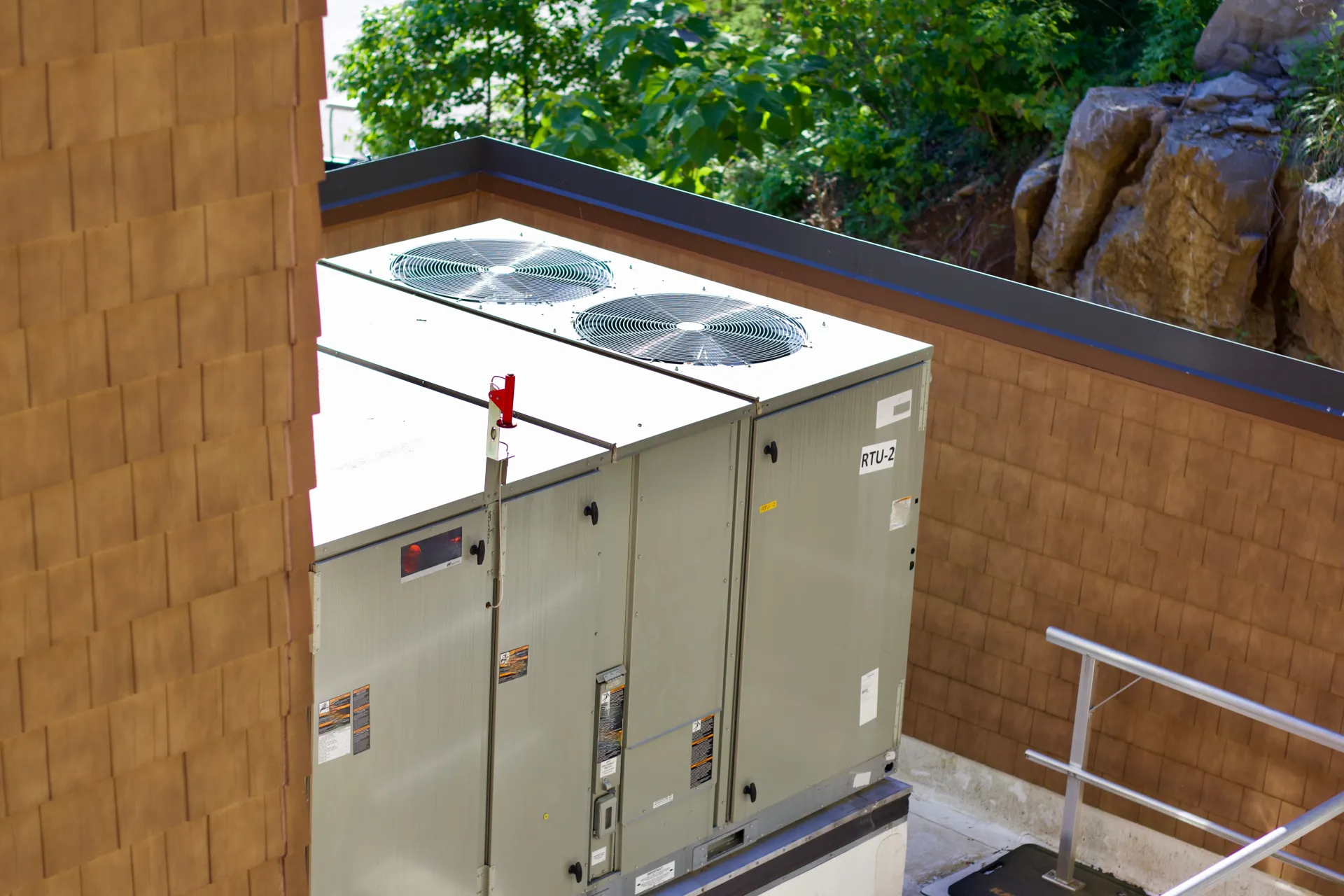
Commercial HVAC Energy Audits
Professional energy assessments to identify savings opportunities and optimize your building's HVAC performance.
Published: January 13, 2026
Reading time: 11 minutes
Commercial HVAC energy audits GTA provide property managers and building owners with actionable insights to reduce energy consumption, lower operating costs, and improve system performance. A comprehensive audit examines your entire HVAC infrastructure, identifies inefficiencies, and prioritizes improvements based on ROI. This guide explains what to expect from a professional energy audit and how to leverage the findings for maximum benefit. Scheduling a formal HVAC energy audits service is the first step to establishing a data-driven efficiency roadmap for any commercial property.
Understanding Energy Audit Levels and Scope
ASHRAE defines three levels of energy audits for commercial buildings — the ASHRAE energy audit commercial building framework guides auditors from preliminary walk-throughs to investment-grade analysis, each increasing in detail and scope. Level 1 - Walk-Through Assessment provides a preliminary analysis of building energy performance, identifying low-cost improvements and potential capital upgrades. The auditor conducts a visual inspection, reviews utility bills, and interviews facility staff. This level typically takes 1-2 days and costs $3,000-8,000 depending on building size.
Level 2 - Energy Survey and Analysis involves more detailed data collection and engineering analysis. The auditor examines HVAC equipment specifications, analyzes operating schedules, measures actual system performance, and develops an energy use baseline. Computer modeling simulates various improvement scenarios. This comprehensive audit costs $15,000-40,000 and requires 1-3 weeks to complete.
Level 3 - Detailed Analysis (sometimes called Investment Grade Audit) provides rigorous engineering analysis for major capital investments. This level includes field measurements, data logging, calibration of building models, and financial analysis with risk assessment. Level 3 audits cost $40,000-100,000+ and serve as the foundation for major equipment replacements or system retrofits.
Energy Audits for GTA Condo Towers and High-Rises
For multi-unit residential towers across the Greater Toronto Area, a thorough HVAC energy efficiency assessment condo buildings management teams commission carries particular significance due to the region's extreme seasonal swings. GTA buildings endure heating-dominant winters where outdoor temperatures regularly drop below minus twenty degrees Celsius, followed by humid summers where cooling loads spike during extended heat waves. This climate variability means that HVAC systems in condo towers and luxury high-rises typically account for 40-60% of total building energy consumption, making them the single largest target for cost reduction.
Equipment Efficiency and Ontario Incentive Programs
Property management companies and condo boards in the GTA should pay special attention to common plant equipment during audits. Central boiler plants with Cleaver-Brooks or Weil-McLain fire-tube boilers, cooling towers from manufacturers like Marley or BAC, and chiller systems from Carrier, Trane, or York all have distinct efficiency profiles that degrade over time. Auditors should evaluate boiler combustion efficiency against Ontario's TSSA requirements, inspect cooling tower fill media for scaling and biological fouling, and assess chiller refrigerant charge levels. In buildings over fifteen years old, it is common to find boiler plant efficiency has degraded by 10-15% from original commissioning values due to scale buildup, failed economizers, and drifting combustion controls.
Ontario-specific incentive programs make energy audit implementation especially attractive for GTA property managers. The Enbridge Gas Distribution savings by design program, along with Toronto Hydro's commercial retrofit incentives, can offset 25-40% of upgrade costs for qualifying measures. The Canada Greener Homes Grant and various municipal programs further improve project economics. Additionally, Ontario's carbon pricing framework under the federal Output-Based Pricing System means that reducing natural gas consumption yields compounding financial benefits as carbon costs escalate. A comprehensive building energy audit property managers Toronto and GTA condo boards commission typically includes TSSA-certified technician assessments and guidance through the incentive application process. HVAC Touch coordinates audit scheduling, equipment evaluations, and helps building engineers navigate available programs. Teams overseeing multiple properties can also integrate audit findings into broader property management HVAC strategies to standardize efficiency improvements across portfolios.
Pre-Audit Preparation and Data Collection
Thorough preparation ensures efficient audit execution and accurate results. Begin by gathering utility bills for the past 24-36 months. The auditor needs electricity, natural gas, and any other fuel consumption data at monthly intervals. This establishes the baseline energy use and reveals seasonal patterns that drive HVAC demand.
Compile equipment documentation including manufacturer specifications, installation manuals, and maintenance records for all HVAC components. Original design documents (mechanical plans, load calculations, control sequences) provide valuable context for understanding system intent versus actual operation. If original documentation is unavailable, create an equipment inventory with nameplate data.
Document operating schedules and occupancy patterns. When is the building actually occupied? What are the setpoints for different zones? Are there after-hours usage requirements? Understanding real-world usage patterns versus design assumptions often reveals significant optimization opportunities.
On-Site Assessment Procedures and Techniques
The on-site assessment combines visual inspection with diagnostic testing to identify performance issues. Auditors use infrared thermography to detect thermal anomalies in ductwork, piping, and building envelopes. This non-invasive technique reveals insulation defects, air leakage points, and thermal bridges that increase energy consumption.
Airflow measurement using capture hoods or pitot tube traverses verifies actual air delivery versus design requirements. Many commercial buildings operate with significant airflow imbalances—some zones over-ventilated while others are under-ventilated. Correcting these imbalances improves comfort while reducing fan energy consumption.
Combustion analysis for boilers and furnaces measures combustion efficiency, identifies safety issues, and verifies proper fuel-air ratios. Modern analyzers measure O2, CO2, CO, and stack temperature to calculate combustion efficiency. A 2-3% efficiency improvement in a large boiler can save thousands annually in fuel costs.
Common HVAC Energy Efficiency Issues Identified
Oversized equipment ranks as the most common issue in commercial buildings. Equipment selected with excessive safety margins operates at low efficiency during part-load conditions, which represents 90% of operating hours. Oversized chillers cycle frequently, never reaching steady-state efficiency. Modern high-efficiency equipment with variable capacity delivers superior performance at a fraction of the size.
Duct leakage wastes enormous amounts of energy. Studies indicate that commercial duct systems typically leak 15-25% of supply airflow. Leaky supply ducts waste conditioned air—leaky return ducts draw in unconditioned air, increasing heating and cooling loads. Aeroseal duct sealing technology can reduce leakage to under 5% with minimal disruption.
Control system problems cause simultaneous heating and cooling, schedule errors, and failed sensors. A common issue involves zone thermostats calling for heating while the AHU supplies cooling air, resulting in the reheating of already-cooled air. HVAC control systems often have overridden schedules or bypassed sensors that defeat energy-saving strategies. Reviewing building automation systems as part of the audit process helps identify control deficiencies that are costing building owners money every day.
Energy Conservation Measures (ECMs) Analysis
The audit report identifies specific energy conservation measures HVAC Toronto building owners can implement, with quantitative savings estimates for each. Low-cost/no-cost measures typically include schedule optimization, thermostat calibration, filter replacement improvements, and control sequence adjustments. These quick wins often yield 5-15% energy savings with minimal investment.
Retrofit opportunities involve equipment upgrades or system modifications requiring capital investment. Common recommendations include variable frequency drives (VFDs) on fan motors, high-efficiency chillers or boilers, energy recovery ventilation, and advanced control systems. Each ECM includes implementation cost, annual savings, simple payback period, and ROI to support decision-making.
Building envelope improvements often complement HVAC upgrades. While technically outside the HVAC system, envelope improvements reduce HVAC loads significantly. Window films, additional insulation, and air sealing reduce heating and cooling demand, potentially allowing downsized HVAC equipment in future replacements.
Financial Analysis and Incentive Programs
Professional audits include financial analysis to prioritize recommendations. Simple payback calculates how many years of energy savings recover the initial investment. However, simple payback ignores lifetime savings—equipment lasting 20 years with a 5-year payback delivers 15 years of pure profit. Life cycle cost analysis provides a more complete picture by accounting for equipment lifetime, energy escalation, and maintenance costs.
Utility incentive programs dramatically improve project economics. Most utilities offer prescriptive rebates for common efficiency measures—VFDs, high-efficiency chillers, lighting upgrades, and controls. Custom incentives pay based on verified kWh savings, often covering 20-50% of project costs. Some utilities also offer technical assistance and zero-interest financing.
Tax incentives further accelerate ROI. Section 179D provides tax deductions for energy-efficient commercial building improvements, potentially worth up to $1.80 per square foot. Some jurisdictions offer property tax abatements for efficiency upgrades. Investigate all available incentives before finalizing project scope.
Post-Audit Implementation and Verification
Receiving the audit report represents the beginning, not the end. Prioritize recommendations based on payback, reliability benefits, and available capital. Many property managers implement quick wins immediately while budgeting larger capital projects for the next fiscal year. Consider bundling multiple ECMs to reduce implementation costs and maximize total savings.
Commissioning during implementation ensures that upgraded equipment performs as specified. Recommissioning existing systems often reveals additional savings opportunities not identified in the original audit. The commissioning agent verifies proper installation, control sequence operation, and system performance under various load conditions.
Measurement and verification (M&V) confirms that savings match predictions. Simple M&V compares utility bills before and after implementation. More rigorous approaches follow the International Performance Measurement and Verification Protocol (IPMVP), using metering data and normalized weather adjustments to isolate HVAC savings from other factors.
Seasonal Considerations for GTA Building Audits
Timing your energy audit strategically can significantly enhance the quality and accuracy of findings. In the Greater Toronto Area, shoulder seasons—late spring and early fall—offer the best audit conditions because both heating and cooling systems are accessible and can be tested under moderate load conditions. Conducting an audit during January may reveal boiler performance issues but will miss cooling system deficiencies, while a July audit captures chiller performance but cannot evaluate heating plant operation. A comprehensive audit scheduled during a transition period allows auditors to observe changeover sequences between heating and cooling modes, test economizer functionality, and verify that building automation systems properly manage the transition between seasonal operating modes.
GTA condo towers face unique audit challenges related to stack effect, which becomes particularly pronounced in buildings over twenty storeys. During winter months, warm air rises through elevator shafts, stairwells, and mechanical chases, creating significant pressure differentials between lower and upper floors. This phenomenon forces unconditioned outdoor air into lower floors through entrance doors, loading docks, and parking garage connections, dramatically increasing heating loads.
A thorough energy audit for a GTA high-rise should quantify stack effect losses using blower door testing or tracer gas analysis and recommend mitigation strategies such as vestibule air curtains, elevator shaft pressurization, and improved weather stripping at building entry points. Addressing stack effect in a forty-storey tower can reduce total heating energy consumption by 8-12%, representing tens of thousands of dollars in annual savings for the condo corporation's operating budget.
Continuous Commissioning and Ongoing Optimization
Buildings degrade over time—setpoints drift, schedules change, equipment performance declines. Continuous commissioning (also called monitoring-based commissioning) uses HVAC control systems and energy management information systems (EMIS) to track performance continuously and alert operators to degradation.
Establish energy performance benchmarks during the audit to establish a baseline. Track Energy Use Intensity (EUI)—kBTU per square foot per year—against the baseline and similar buildings. ENERGY STAR Portfolio Manager provides a free platform for benchmarking and earning recognition for superior performance.
Schedule annual energy reviews to maintain momentum. Even with continuous monitoring, periodic reassessment identifies new opportunities as technology advances and utility rates change. Many organizations implement energy audits every 3-5 years to maintain continuous improvement.
15-30%
Average energy savings identified
2-5 years
Typical payback period for ECMs
20-50%
Utility incentives cover costs
Key Takeaways
- ASHRAE Level 2 audits provide the best balance of detail and cost for most commercial buildings
- Gather 24-36 months of utility bills and all equipment documentation before the audit begins
- Common issues include oversized equipment, duct leakage, and control system problems
- Utility incentives and tax credits can cover 20-50% of improvement project costs
Related Topics
Ready to Reduce Your Energy Costs?
Our certified energy auditors provide comprehensive assessments that identify savings opportunities and prioritize improvements based on ROI.
Schedule Your Energy Audit