Commercial HVAC Regulations Compliance
Essential guide to Ontario building codes and commercial HVAC regulations to ensure compliance and avoid penalties.
Published: January 12, 2026
Reading time: 13 minutes
Navigating commercial HVAC regulations compliance Ontario requires thorough understanding of multiple code requirements, municipal bylaws, and industry standards. Non-compliance results in failed inspections, costly work orders, and potential liability issues. This comprehensive guide breaks down essential regulatory requirements for property managers, building engineers, and HVAC professionals operating in Ontario.
Ontario Building Code Division B Part 6 Requirements
The Ontario Building Code (OBC) Division B Part 6 establishes mandatory requirements for HVAC design, installation, and operation. Section 6.2 addresses heating, ventilating, and air conditioning systems with specific requirements for ventilation rates, equipment efficiency, and system design. All commercial buildings must comply with these minimum standards to obtain occupancy permits. Our team helps clients navigate HVAC regulations compliance requirements across all Ontario occupancy types.
Ventilation requirements vary by occupancy classification. Office buildings require minimum outdoor air rates of 10 L/s per person for general office space. Retail spaces require 7.5-15 L/s per person depending on area density. Restaurants need substantially more—up to 20 L/s per person for dining areas. These Ontario Building Code HVAC requirements commercial buildings must meet ensure adequate ventilation rates and prevent occupant health issues. Properly managed indoor air quality programs demonstrate code diligence and protect occupant wellbeing.
Equipment efficiency standards mandate minimum performance levels for HVAC equipment installed in Ontario. Commercial air conditioners must meet minimum SEER (Seasonal Energy Efficiency Ratio) requirements—currently 14 SEER for equipment under 65,000 BTU/h. Larger equipment must meet minimum IEER (Integrated Energy Efficiency Ratio) requirements. Boilers must achieve minimum thermal efficiency ratings typically 80-85% depending on type and size.
TSSA Requirements and Refrigerant Handling
The Technical Standards and Safety Authority (TSSA) oversees refrigeration and air conditioning systems in Ontario. Any technician working on refrigeration systems exceeding 3 kW must hold valid Ozone Depletion Prevention (ODP) certification and TSSA refrigeration handling certification. Property managers must verify that all HVAC contractors maintain current credentials. Maintaining TSSA HVAC compliance commercial Toronto buildings require starts with verified contractor credentials and documented refrigerant handling procedures. Visit our Toronto HVAC services page to learn how we support GTA property owners.
Refrigerant record-keeping requirements mandate that building owners maintain logs showing refrigerant type, charge amount, and any additions or recovery performed. Commercial HVAC permit requirements GTA contractors must satisfy include refrigerant handling documentation filed with the relevant authorities. For systems containing over 50 kg of refrigerant, annual leak testing is mandatory with reporting to Environment and Climate Change Canada. Systems with leaks exceeding 23% of charge per year require repair within 30 days.
Refrigerant transition regulations phase out high-GWP (Global Warming Potential) refrigerants. R-410A remains acceptable for new installations, but R-404A used in commercial refrigeration faces phase-down schedules. When replacing major equipment, verify that the selected refrigerant complies with current federal regulations and will remain available for the system's expected lifespan.
Fire and Mechanical Code Integration
HVAC systems must comply with Ontario Fire Code requirements for fire and smoke control. Fire dampers are required where ducts penetrate fire separations with fire-resistance ratings. These dampers must be UL-listed and installed according to manufacturer specifications. Annual inspection and testing of fire dampers is mandatory under the Fire Code—document all inspections and maintain records for fire department review.
Smoke detectors in HVAC systems serve critical life safety functions. Smoke detectors installed in return air ducts must automatically shut down the air handling unit to prevent smoke circulation. Detectors require regular testing and cleaning—dust accumulation causes nuisance tripping and reduces sensitivity. Coordinate smoke detector maintenance with fire alarm system testing requirements.
Commercial kitchen exhaust systems require special attention. UL-listed exhaust hoods with appropriate fire suppression systems protect against grease fires. Ducts must be constructed of 16-gauge steel with welded joints. Semi-annual professional cleaning is mandatory for most food service operations—maintain cleaning certificates and schedule regular inspections.
WSIB and Workplace Safety Requirements for HVAC Work
Property managers and condo boards in Ontario must ensure that all HVAC contractors carry valid Workplace Safety and Insurance Board (WSIB) coverage before permitting any work on building mechanical systems. WSIB coverage protects both the building corporation and individual workers in the event of workplace injuries during HVAC maintenance, repair, or installation activities. Without valid WSIB clearance certificates, the property owner or condo corporation may be held liable for workplace injuries and associated costs. Request current WSIB clearance certificates from all HVAC contractors before work begins, and verify certificates through the WSIB online portal to confirm they are genuine and current.
Confined space entry regulations under Ontario's Occupational Health and Safety Act apply to many HVAC maintenance activities in commercial and multi-unit residential buildings. Boiler rooms, cooling tower basins, large ductwork sections, and underground mechanical vaults may qualify as confined spaces requiring formal entry procedures, atmospheric monitoring, and rescue plans. HVAC technicians entering confined spaces must hold valid confined space entry training certificates, and the building must have a written confined space entry program.
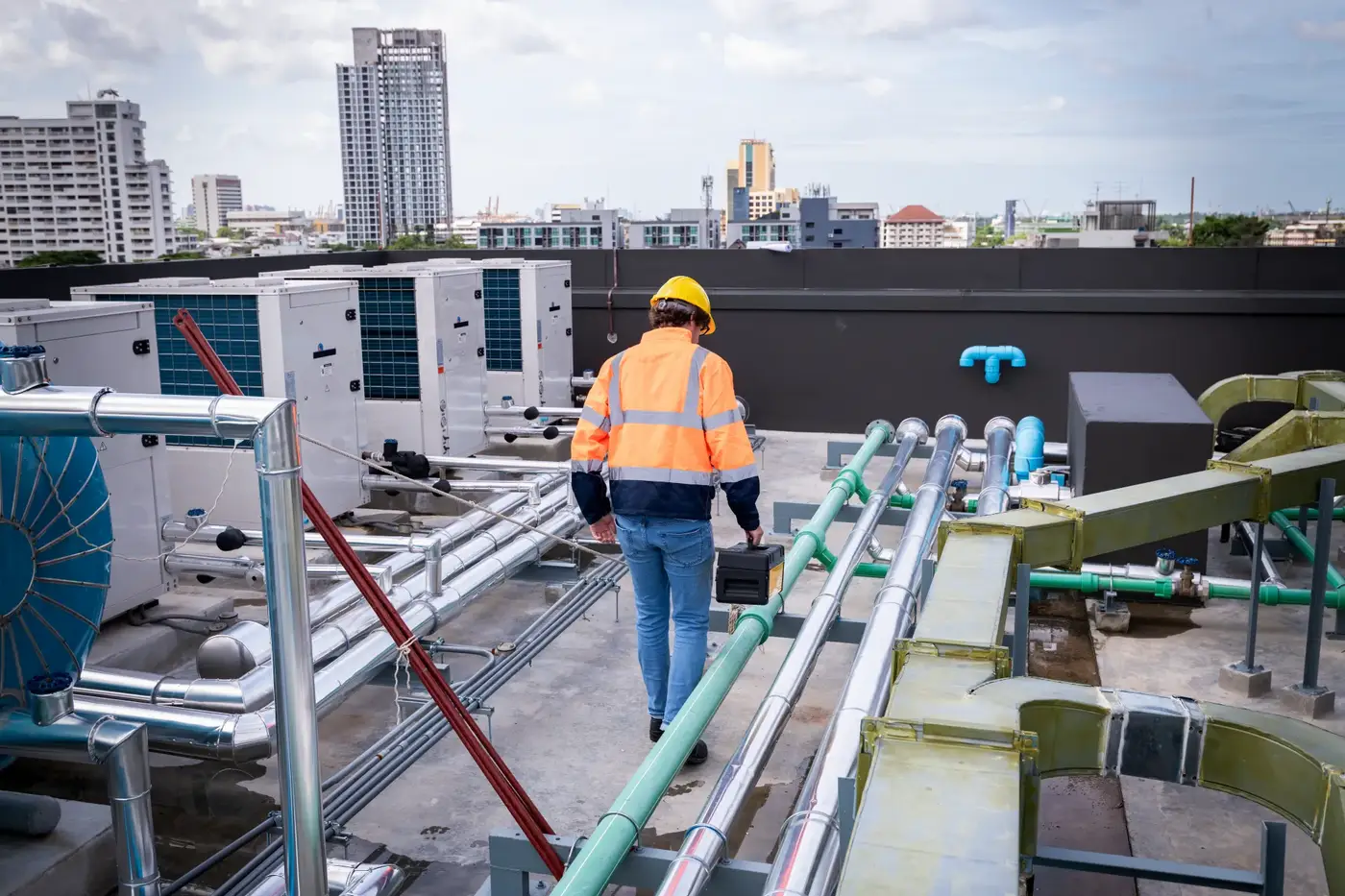
HVAC Touch is a WSIB certified HVAC contractor Ontario property managers and condo boards trust, maintaining full WSIB coverage and ensuring all technicians hold current confined space entry certifications, fall protection training, and other safety credentials required for commercial HVAC work across the Greater Toronto Area. Working at heights regulations are particularly relevant for rooftop HVAC equipment maintenance on GTA high-rise buildings. Ontario requires that any worker operating at a height of three metres or more complete an approved Working at Heights training program. Rooftop equipment access must include engineered fall protection systems such as permanent guardrails, horizontal lifeline systems, or designated anchor points for personal fall arrest equipment. Property managers should verify that rooftop fall protection systems are inspected annually by a professional engineer and that all HVAC contractors accessing rooftop equipment have completed the required training.
Ventilation and Indoor Air Quality Standards
ASHRAE Standard 62.1, referenced by the OBC, provides detailed ventilation requirements for acceptable indoor air quality. The standard addresses both ventilation rate procedure and indoor air quality procedure approaches. Most commercial buildings follow the ventilation rate procedure, which prescribes outdoor air rates based on space type, occupant density, and floor area.
Carbon dioxide monitoring is required in certain occupancy types to ensure adequate ventilation. Demand-controlled ventilation systems using CO2 sensors can reduce outdoor air intake when spaces are unoccupied or lightly occupied, saving energy while maintaining air quality. Sensors require regular calibration—typically annually—to ensure accurate readings.
Filtration requirements protect both equipment and occupants. OBC minimum requirements specify MERV 8 filtration for most commercial applications. Healthcare facilities require MERV 13-16 filtration depending on area classification. Higher efficiency filters increase pressure drop—verify that fan motors can handle the additional static pressure and adjust fan speed if necessary.
Accessibility and Equipment Location Requirements
Ontario's Accessibility for Ontarians with Disabilities Act (AODA) impacts HVAC system design and equipment location. Thermostat and control placement must accommodate wheelchair users—mount controls between 15-48 inches from finished floor. Provide clear space in front of controls for wheelchair approach and operation.
Equipment rooms require adequate access for maintenance and emergency egress. Main aisles must be minimum 36 inches wide with 24 inches clearance on three sides of equipment. Large equipment requiring removal or major service must have doors and corridors sufficient for equipment extraction—plan equipment access paths during design to avoid expensive modifications.
Equipment noise limitations protect occupant comfort and comply with municipal noise bylaws. Most municipalities prohibit equipment noise exceeding 45-50 dBA at property lines during nighttime hours. Select quiet equipment, install vibration isolation, and consider sound attenuators for roof-mounted units near residential areas.
Municipal Bylaws and Local Requirements
Ontario municipalities may enact bylaws exceeding provincial minimums. Toronto's Green Standard requires higher performance than the OBC for new construction and major renovations. Buildings must achieve specific energy performance targets and comply with more stringent ventilation requirements. Verify local requirements before starting any HVAC project.
Equipment permits are required for most HVAC installations. Building permits are necessary for new equipment installations, ductwork modifications, and fuel supply changes. Electrical permits are required for equipment wiring and control systems. Refrigeration permits from TSSA are needed for systems exceeding specified capacity thresholds. Failure to obtain proper permits can result in work orders requiring removal and reinstallation.
Historical district requirements may restrict equipment placement, screening, and appearance. Many Ontario cities require that rooftop equipment be screened from view from adjacent streets. Municipalities may designate specific equipment locations and require architecturally compatible screening materials. Early consultation with municipal planning departments prevents costly relocations.
Maintenance and Inspection Compliance
The Fire Code requires annual inspection and testing of fire dampers, smoke detectors, and fire suppression systems. Document all inspections with date, inspector name, findings, and corrective actions. Maintain these records on-site for fire department review during routine inspections.
Preventive maintenance programs support compliance by ensuring equipment operates as designed. Regular filter changes, coil cleaning, and belt replacements maintain efficiency and prevent conditions that could violate indoor air quality requirements. Implement computerized maintenance management systems (CMMS) to track maintenance schedules and automatically generate compliance reports. Our structured HVAC maintenance packages are designed to keep GTA buildings permanently code-compliant.
Equipment upgrades and replacements must meet current code requirements, not the code in effect when the building was constructed. When replacing air conditioners, boilers, or other major equipment, verify that new equipment meets current efficiency standards. This often provides opportunity for significant efficiency upgrades while maintaining compliance.
Condo Act and Condominium Authority Requirements
Ontario's Condominium Act imposes additional obligations on condo corporations that directly impact HVAC system compliance and maintenance. Reserve fund studies, required every three years, must account for the remaining useful life and replacement costs of all major HVAC components including boilers, chillers, cooling towers, air handling units, and building automation systems. Property management companies working with condo boards must ensure that reserve fund contributions adequately reflect the true replacement costs of aging HVAC infrastructure—a common shortfall in older GTA towers where original reserve fund studies underestimated the cost of replacing legacy equipment with modern, code-compliant systems.
The Condominium Authority of Ontario requires that condo boards maintain transparency with unit owners regarding building maintenance and capital expenditure decisions, including major HVAC projects. Any HVAC replacement or upgrade project exceeding a specified threshold typically requires board approval and, in some cases, unit owner notification or vote. Property managers should work closely with their HVAC service partners to develop detailed project specifications, cost analyses, and compliance documentation that supports informed board decision-making and satisfies the disclosure requirements under the Condominium Act.
HVAC Touch provides comprehensive project documentation packages that include equipment specifications, Ontario Building Code compliance statements, TSSA permit requirements, and projected energy savings analyses that help condo boards evaluate and approve HVAC capital projects with confidence.
Documentation and Record-Keeping Requirements
Maintain comprehensive documentation to demonstrate compliance during inspections and support property transactions. As-built drawings show final equipment locations, duct routing, and control system architecture. Update drawings after any modifications to reflect current system configuration.
Equipment manuals, startup reports, and balancing records should be retained for the equipment's service life. This documentation proves invaluable for troubleshooting, future upgrades, and demonstrating that systems were properly commissioned and balanced according to code requirements.
Create a compliance binder organizing all permits, inspection reports, maintenance records, and certifications. Include TSSA contractor credentials, refrigerant logs, fire inspection reports, and equipment warranties. This centralized documentation system simplifies code compliance and provides peace of mind during regulatory inspections.
$10,000+
Daily fines for non-compliance
100%
Permit inspection required
23%
Max allowable refrigerant leak rate
Key Takeaways
- All HVAC contractors must hold valid TSSA and ODP certifications
- Maintain refrigerant logs and fire inspection records for compliance verification
- Equipment replacements must meet current code requirements, not original construction standards
- Verify municipal bylaws for requirements exceeding provincial minimums
Related Topics
Need Compliance Assistance?
Our certified experts ensure your HVAC systems meet all Ontario building codes, TSSA requirements, and municipal bylaws.
Schedule Compliance Review