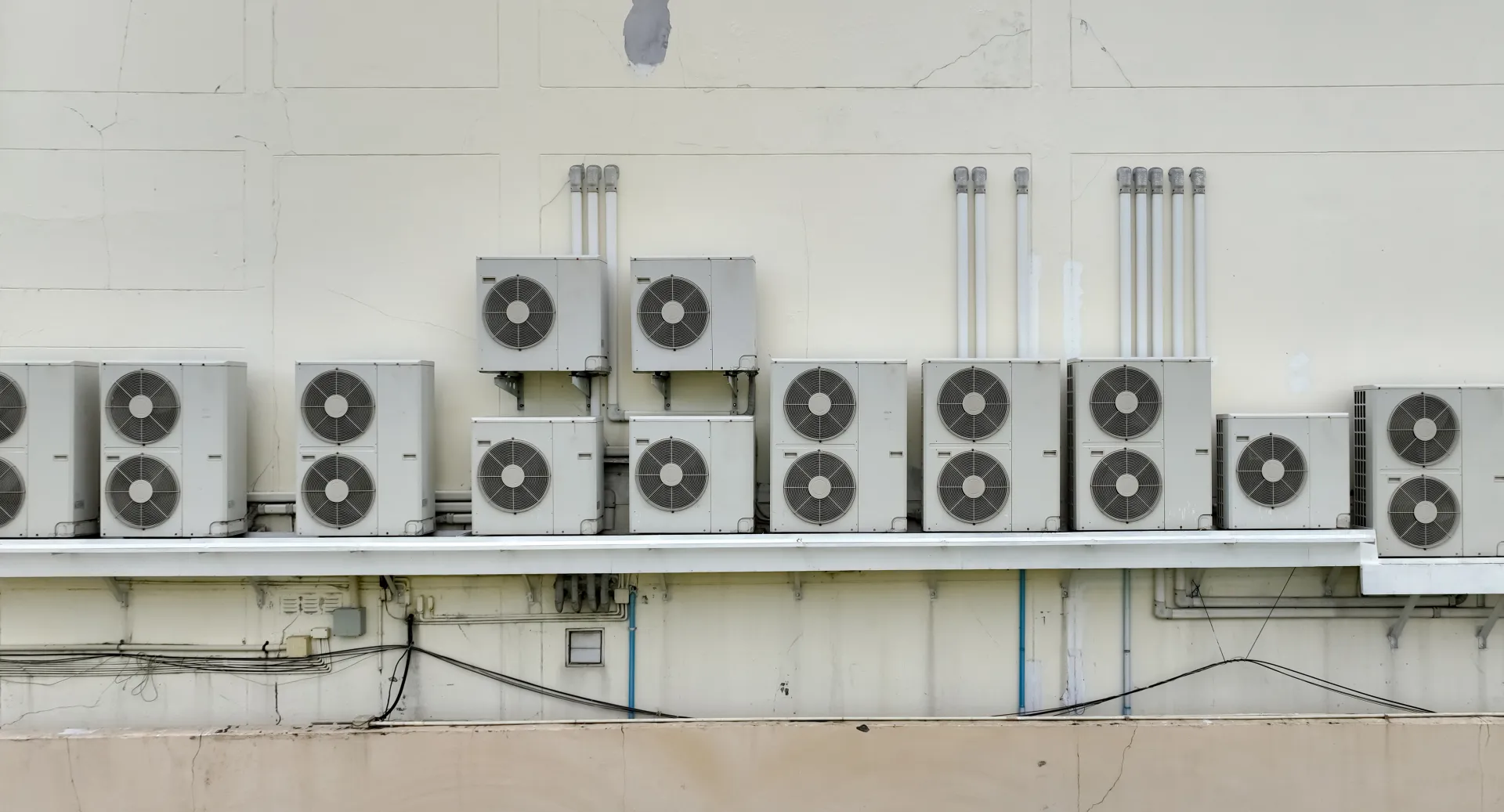
HVAC problems can disrupt building operations, compromise comfort, and lead to expensive repairs if not addressed promptly. This guide helps property managers and building engineers with HVAC troubleshooting commercial buildings Toronto, perform basic diagnostics, and determine when commercial HVAC repair GTA is required. For urgent system failures, our emergency HVAC services provide rapid response across the GTA. Industry standards from HRAI also support best practices for diagnostics and repair.
System Not Cooling
When an HVAC system runs but doesn't provide adequate cooling, several potential causes should be investigated systematically. Effective HVAC troubleshooting starts with the simplest checks before moving to more complex diagnostics. For condo suites specifically, our condo HVAC repair service addresses fan coil cooling failures with minimal disruption to residents.
Basic Checks: Verify thermostat is set to cooling mode and temperature is set below current room temperature. Check that air filters are clean—clogged filters restrict airflow and reduce cooling capacity. Inspect circuit breakers and fuses for the condensing unit and air handler. Ensure all supply and return air grilles are open and unobstructed. Clear debris from outdoor condensing unit coils and maintain 2-3 feet of clearance around the unit.
When to Call Professional: If refrigerant lines are frosted or iced over, indicating low refrigerant or airflow problems. If compressor fails to start but makes humming sound, suggesting start capacitor or compressor issues. If condensing unit fan motor isn't running, requiring motor or capacitor replacement. If you notice refrigerant leaks (oil stains, hissing sounds). If system cycles on and off frequently (short cycling), indicating potential refrigerant, thermostat, or control problems.
System Not Heating
HVAC cooling heating problems GTA property managers encounter require immediate attention in cold weather to prevent pipe freezes and occupant discomfort. Systematic troubleshooting helps identify whether the issue is simple or requires professional service. For the most common HVAC problems solutions commercial Toronto buildings encounter, a structured diagnostic approach is essential.
Basic Checks: Verify thermostat is set to heating mode and temperature is set above current room temperature. Check that furnace/boiler power switch is on. Inspect circuit breakers and fuses for the heating system. For gas systems, verify gas supply valve is open and pilot light is lit (if applicable). Check that air filters are clean. For boilers, verify water pressure is typically 12-15 PSI when cold. Ensure all supply and return registers are open.
When to Call Professional: If you smell gas, evacuate immediately and call gas company from outside. If pilot light won't stay lit, indicating thermocouple or gas valve problems. If burners won't ignite, requiring ignition system or gas valve diagnosis. If boiler pressure is too high or too low. If you notice carbon monoxide detector alarms. If system makes unusual banging, popping, or rattling sounds. If heat exchanger is suspected to be cracked (soot around burner, flame rollout).
Poor Airflow
Inadequate airflow reduces system capacity, efficiency, and comfort while potentially causing equipment damage. Condo HVAC fault diagnosis Toronto and commercial building investigations most commonly trace poor performance back to airflow restrictions that can be identified systematically to restore proper system performance.
Common Causes: Clogged air filters are the most common cause—replace filters monthly during peak seasons. Closed or obstructed supply registers and return grilles reduce system airflow. Blocked return air pathways from furniture, drapes, or stored items. Collapsed or disconnected flexible ductwork in attic or crawl spaces. Dirty evaporator coils restricting airflow through air handler. Blower motor running at reduced speed due to capacitor or motor issues. Duct leaks reducing delivered air to conditioned spaces.
Diagnostic Steps: Check filter condition and replace if dirty. Verify all registers are fully open and unobstructed. Measure airflow at supply registers using anemometer or airflow hood. Compare to design airflow typically specified on equipment nameplate. Inspect accessible ductwork for disconnections, collapses, or significant leaks. Check blower motor amp draw and compare to nameplate rating. Inspect evaporator coil for dirt and debris buildup. Professional duct testing can identify leaks and restrictions in hard-to-access areas.
Unusual Noises
Unusual HVAC noises often indicate developing problems that should be addressed before they cause complete system failure. Different sounds point to specific issues that help technicians diagnose problems quickly.
Common Noise Types: Banging or clanking typically indicates loose or broken components, worn belts, or motor mount problems. Squealing or screeching usually means worn blower motor bearings, bad belts, or failing fan motor. Clicking during normal operation suggests relay problems or loose components. Rattling often indicates loose panels, screws, or debris in blower wheel. Hissing may indicate refrigerant leaks or duct air leaks. Buzzing suggests electrical issues with relays, contactors, or compressors. Gurgling in refrigerant lines indicates improper refrigerant charge or oil logging.
Action Steps: Note when noise occurs (startup, shutdown, continuous operation). Identify location of noise (indoor unit, outdoor unit, ductwork, thermostats). Record noise if possible to help technician diagnose issue. Check for loose access panels and fasteners. Inspect visible belts for wear and proper tension. Don't ignore unusual noises—addressing problems early prevents more extensive damage. Some noises indicate safety issues that require immediate professional attention.
Thermostat Problems
Thermostat issues cause systems to run at wrong times, not reach setpoints, or cycle improperly. Many thermostat problems are simple fixes, while others require replacement or professional service.
Common Issues: Dead batteries cause display to go blank and system to stop working. Incorrect programming leads to uncomfortable temperatures or wasted energy. Poor thermostat location (near heat sources, in direct sunlight, or exterior walls) causes inaccurate readings. Loose wiring connections cause intermittent operation. Mismatched system type (single-stage vs multi-stage) causes poor performance. Dirty thermostat internals affect temperature sensing accuracy.
Troubleshooting Steps: Replace batteries annually or when low battery indicator appears. Verify programming matches occupancy needs and seasonal requirements. Check that thermostat is level and not affected by heat sources or direct sunlight. Test system by moving setpoint several degrees above/below room temperature. Remove thermostat cover and check for loose wire connections. Clean thermostat internals with compressed air. Consider upgrading to programmable or smart thermostat for enhanced control and diagnostics.
Frequent System Cycling
Short cycling—systems that turn on and off frequently—reduces efficiency, increases wear, and compromises comfort. This symptom indicates various underlying causes that should be identified and corrected.
Potential Causes: Oversized equipment reaches setpoint quickly but doesn't run long enough for proper dehumidification or even temperature distribution. Clogged air filter causes system to overheat and shut down on safety limit. Low refrigerant charge causes rapid cycling as pressure switches trip. Dirty outdoor condenser coil prevents proper heat rejection. Thermostat location near supply register causes premature cycling. Improper thermostat anticipator setting (non-programmable thermostats). Airflow restrictions from closed vents or blocked ductwork.
Diagnostic Approach: Check and replace air filters if dirty. Verify all supply registers are open and unobstructed. Clean outdoor condenser coil and ensure adequate airflow around unit. Measure temperature drop across evaporator coil (should be 15-20F for cooling). Check refrigerant pressures (requires professional gauges). Verify thermostat isn't affected by supply air discharge. Have professional evaluate equipment sizing if problem persists and system is relatively new.
Excessive Humidity
High humidity causes discomfort, mold growth, and indoor air quality problems. HVAC systems should control humidity effectively, but various issues can compromise dehumidification performance.
Common Causes: Oversized cooling equipment short cycles and doesn't run long enough for effective dehumidification. Improper thermostat setup prioritizes temperature over humidity control. Inadequate outdoor air conditioning in humid climates. Evaporator coil too cold causes ice formation and reduced dehumidification. Negative building pressure draws in humid outdoor air through leaks. Missing or malfunctioning dehumidification equipment in humid climates.
Solutions: Run thermostat fan in "on" mode rather than "auto" to improve moisture removal. Lower thermostat setpoint to increase dehumidification. Install programmable thermostat with humidity control feature. Add dedicated dehumidification equipment for humid climates. Reduce outdoor air infiltration through air sealing. Ensure proper refrigerant charge for optimal coil temperature. Consider variable-speed equipment that runs longer at lower capacity for better humidity control.
Common HVAC Problems in GTA Condo Buildings
Condo towers and luxury high-rises across the Greater Toronto Area experience several HVAC problems that are specific to the region's climate and building construction. One of the most prevalent issues is inadequate heating during extreme cold events, when outdoor temperatures drop below minus twenty degrees Celsius and central boiler plants struggle to maintain supply water temperatures high enough to satisfy demand from all suites simultaneously. Property managers should work with their HVAC service providers to verify that boiler plant capacity matches the building's actual peak heating load, which may exceed original design calculations in older buildings where envelope degradation has increased heat loss through aging curtain wall systems and deteriorated window seals.
Another GTA-specific issue involves condensation on fan coil unit coils and condensate drainage problems during the humid summer months from June through September. When outdoor humidity levels exceed the capacity of fan coil units to dehumidify effectively, condensation can overwhelm condensate drain pans and cause water damage to suite finishes, ceiling tiles, and hardwood flooring. HVAC Touch recommends that property management companies schedule annual condensate drain cleaning and pan treatment before each cooling season, verify that all condensate drain lines are properly sloped and free of obstructions, and install overflow safety switches on fan coil units located above occupied spaces.
Stack effect in GTA high-rise buildings creates unique troubleshooting challenges that building engineers must understand. During winter, the temperature-driven pressure differential between lower and upper floors causes cold outdoor air to infiltrate at ground level while warm air escapes through upper-floor openings and mechanical penetrations. This phenomenon manifests as cold drafts in ground-floor lobbies, difficulty closing entrance doors, whistling sounds through elevator door gaps, and uneven temperatures between lower and upper floors.
Troubleshooting stack effect requires a whole-building approach that addresses air barrier continuity, vestibule and entrance door air sealing, elevator shaft pressurization, and mechanical chase fire stopping rather than attempting to compensate with individual suite HVAC adjustments alone.
Preventive Maintenance Strategies
Regular preventive maintenance prevents most common HVAC problems and extends equipment life. A proactive maintenance program reduces the need for commercial HVAC repair and ensures reliable comfort year-round. Our HVAC maintenance packages are designed to catch developing issues before they become costly failures.
Monthly Tasks: Check air filters and replace when dirty—typically every 1-3 months during peak seasons. Inspect system operation and note any unusual noises or performance issues. Check thermostat settings and adjust for seasonal needs. Monitor energy consumption for unusual increases that may indicate developing problems. Clear debris from outdoor condensing unit.
Professional Maintenance: Schedule semi-annual professional maintenance before heating and cooling seasons. Professional maintenance should include refrigerant charge check and adjustment, coil cleaning, motor and bearing lubrication, belt inspection and replacement, electrical connection tightening, safety control testing, and airflow measurement. Maintenance contracts typically cost $200-400 annually but prevent $1,000+ in repairs and extend equipment life by 5-10 years.
HVAC Problem Statistics
Key Takeaways
- Basic troubleshooting starts with simple checks: filters, thermostats, breakers, and airflow
- Strange noises indicate developing problems that should be addressed before complete failure
- Gas odors or carbon monoxide alarms require immediate evacuation and emergency service
- Refrigerant leaks and electrical issues always require professional HVAC service
- Preventive maintenance prevents most common problems and extends equipment life
Related Topics
Need Professional HVAC Service?
Our certified technicians provide expert troubleshooting and repair for all HVAC systems. Contact us for fast, reliable service.