HVAC System Selection Guide For Commercial Properties
Comprehensive guide to selecting the right HVAC system for your commercial property based on needs, budget, and efficiency requirements.
Following an HVAC system selection guide commercial Toronto building owners trust means balancing multiple factors including building characteristics, comfort requirements, efficiency goals, first costs, and lifecycle operating expenses. This systematic approach ensures you choose systems that deliver optimal performance and value over their entire operating life.
Building Assessment and Needs Analysis
Thorough building assessment forms the basis for commercial HVAC equipment selection GTA engineers perform, identifying specific requirements, constraints, and opportunities that affect equipment choices.
Building Characteristics Analysis begins with understanding physical and operational factors that impact HVAC requirements. Document building size, floor plan, floor-to-floor heights, and structural elements that affect equipment placement and distribution routing. Identify building envelope characteristics including insulation levels, window areas, and construction quality that influence load requirements.
Analyze existing mechanical spaces, their locations, sizes, and access for equipment installation and maintenance. Consider architectural constraints that might limit equipment options or require special configurations. Document available utility services including electrical capacity, gas service, and water availability that affect system choices.
Occupancy and Usage Requirements determine system capacity and flexibility needs. Analyze current occupancy patterns including hours of operation, occupancy density, and activity levels. Consider future growth projections that might require additional capacity or system expansion. Key usage factors include:
- Special requirements such as process cooling, humidity control, or filtration for specific tenant operations
- Tenant mix and whether different tenants have varying HVAC requirements
- Seasonal variations in usage that might affect equipment sizing and configuration decisions
Understanding what makes the best HVAC system commercial buildings Toronto operators choose starts with comfort and performance expectations, which set the baseline for system capabilities and features. Define acceptable temperature ranges and humidity levels for different building areas. Establish air quality requirements including ventilation rates and filtration needs. Identify noise criteria for different spaces that might affect equipment selection or location. Consider owner and tenant expectations for individual temperature control and system responsiveness. Determine reliability requirements and acceptable downtime for maintenance or repairs that affect redundancy decisions.
System Type Comparison
Understanding the strengths, limitations, and appropriate applications of different HVAC system types enables informed selection that matches building requirements.
Central Plant Systems use chillers, boilers, and cooling towers serving air handling units distributed throughout the building. These systems offer high efficiency for large buildings through economies of scale and improved part-load performance. Central equipment locations facilitate maintenance and reduce noise impact on occupied spaces, and systems provide flexibility for future expansion. However, central plants require significant first cost, dedicated mechanical space, and complex distribution systems. Best suited for buildings over 50,000 square feet or properties with high cooling loads where efficiency benefits justify the investment. Learn more about our commercial HVAC installation services for large-scale projects.
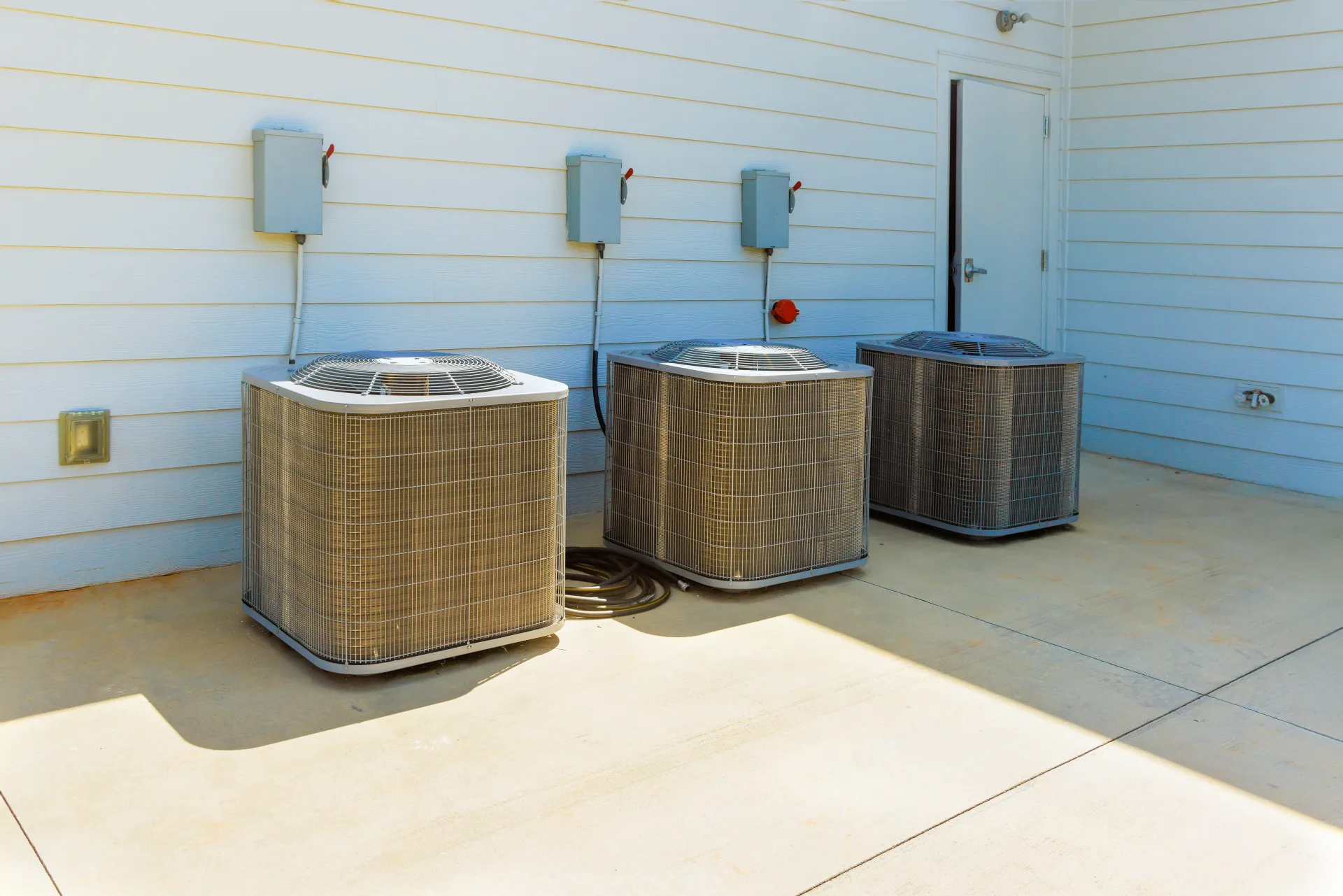
Rooftop Unit Systems provide packaged heating and cooling in self-contained units installed on the roof. RTUs offer lower first costs, simplified installation, and individual zone control that matches tenant needs. Each unit can operate independently, providing redundancy if one unit fails. However, RTUs typically offer lower efficiency than central plants, have limited capacity for large buildings, and expose equipment to weather that reduces service life. Best suited for low-rise buildings under 50,000 square feet, retail properties, and buildings with diverse tenant requirements.
A VRF system commercial buildings GTA engineers often recommend uses refrigerant piping connecting outdoor condensing units to multiple indoor fan coil units. VRF systems provide excellent zoning capabilities with individual temperature control in each space. Systems offer high efficiency through variable-speed compressors and heat recovery capabilities that transfer energy from spaces requiring cooling to those requiring heating. Installation requires minimal mechanical space and provides design flexibility for building renovations. However, VRF systems have higher first costs than conventional systems, require specialized refrigerant piping and certified installers, and may have limited capacity in extreme climates. Best suited for mid-size commercial buildings, office renovations, and applications with diverse simultaneous heating and cooling needs. Explore HVAC system upgrades options when transitioning to modern systems like VRF.
Efficiency and Sustainability Considerations
Energy efficiency requirements and sustainability goals increasingly drive HVAC system selection decisions, affecting both operating costs and environmental impact.
Efficiency Rating Analysis compares energy consumption across different HVAC system types under standardized conditions. Review equipment efficiency ratings including EER, SEER, COP, and IPLV to understand full-load and part-load performance. Compare ratings across similar equipment types using the same metrics to ensure valid comparisons. Consider part-load efficiency since HVAC systems rarely operate at full capacity, and analyze efficiency curves showing performance across the operating range rather than single-point ratings. The ASHRAE HVAC Standards and Guidelines provide authoritative efficiency benchmarks for commercial system evaluation.
Energy Recovery Potential significantly impacts overall system efficiency and operating costs. Evaluate energy recovery ventilation options that precondition outdoor air using exhaust air energy. Consider heat recovery systems for central plant equipment that capture waste heat from processes or cooling systems. Analyze whether air-side or water-side energy recovery provides better economics for your application. Factor local climate conditions since energy recovery benefits vary significantly based on heating and cooling degree days. Include first cost impacts, maintenance requirements, and expected energy savings in investment decisions.
Environmental Impact Assessment considers refrigerants, emissions, and sustainability factors. Chiller system selection commercial Toronto projects must compare refrigerant types considering global warming potential and phasedown schedules that might affect future servicing. Evaluate equipment emissions including NOx and CO2 for fossil-fueled equipment. Consider renewable energy integration potential including solar thermal, geothermal, or waste heat recovery. Research available incentives, rebates, or tax credits for high-efficiency equipment or renewable energy systems. Select equipment that positions your building for future environmental regulation changes rather than requiring premature replacement.
First Cost and Lifecycle Economics
Balancing first cost against lifecycle operating expenses requires analyzing total cost of ownership rather than simply choosing the lowest initial price.
First Cost Budgeting must account for all components required for complete, operational systems. Key budget categories include:
- Major equipment including chillers, boilers, air handlers, or rooftop units
- Distribution system costs for ductwork, piping, pumps, and terminals
- Control system costs including sensors, actuators, controllers, and HVAC controls integration
- Electrical service upgrades, gas piping, and water service modifications
- Structural modifications, architectural changes, or sound attenuation measures
- Contingencies typically 15-20% for unforeseen conditions or price changes during construction
Operating Cost Analysis projects ongoing expenses for energy, maintenance, and repairs over the system lifecycle. Calculate annual energy costs using bin weather data and equipment part-load performance rather than simplified degree-day methods. Include energy costs for all equipment including chillers, boilers, pumps, fans, and cooling towers. Estimate maintenance costs based on manufacturer recommendations and industry benchmarks for similar equipment. Budget for periodic component replacements including compressors, bearings, and heat exchangers over the equipment lifecycle. Consider utility rate trends and potential future increases that affect life-cycle economics.
ROI and Payback Analysis compares investment options using financial metrics that support decision-making. Calculate simple payback period comparing higher first cost for efficient equipment against energy savings to determine how quickly the investment pays for itself. Perform lifecycle cost analysis using net present value calculations that compare total costs over the equipment lifetime including time value of money. Calculate return on investment percentages to compare HVAC options against other potential capital investments. Consider non-financial benefits including improved comfort, reliability, and environmental performance that support premium investments even when financial payback extends beyond typical thresholds. Our HVAC energy audits help identify cost-saving opportunities before committing to major system investments.
Maintenance and Reliability Factors
Equipment reliability and maintenance requirements significantly impact long-term satisfaction and operating costs, making these factors critical in system selection.
Maintenance Requirements Analysis identifies ongoing service needs and their impact on building operations. Review manufacturer-recommended maintenance intervals and tasks for each equipment option. Determine whether maintenance can be performed in-house or requires specialized service contractors. Consider accessibility for routine maintenance including filter changes, belt replacements, and coil cleaning. Evaluate whether equipment requires shutdown for servicing or can be maintained while remaining operational. Factor maintenance costs into lifecycle budgets, considering both parts and labor.
Reliability and Durability Assessment considers equipment service life and failure rates. Research industry data on typical equipment lifespans and common failure modes for different equipment types. Consider operating conditions that affect durability including hours of operation, loading patterns, and environmental exposure. Evaluate whether redundant equipment is required to maintain operations during maintenance or failures. Review manufacturer warranties and understand coverage terms, exclusions, and requirements. Consider manufacturer reputation, service support availability, and parts availability for the long term.
Service Availability and Support affects your ability to maintain systems properly over their lifecycle. Verify availability of qualified service contractors in your area familiar with the equipment you're considering. Consider whether systems use industry-standard components or proprietary parts that might be difficult to source. Research manufacturer support including technical assistance, spare parts availability, and emergency service capabilities. Evaluate whether control systems use open protocols or proprietary architectures that limit future service options. Consider long-term viability of equipment manufacturers and whether they're likely to remain in business to support warranties and provide parts.
Future Flexibility and Expansion
Selecting systems that can adapt to changing needs protects your investment and avoids premature replacement as building requirements evolve.
Expansion Capability determines whether systems can accommodate future growth without complete replacement. Evaluate whether systems have capacity for additional zones or increased loads in the future. Consider whether equipment can be staged with additional units added as needs grow rather than oversizing initially. Analyze distribution systems for capacity to serve additional areas or tenant spaces. Determine whether control systems can be expanded to accommodate additional equipment or points. Plan for physical space requirements for future equipment additions including structural capacity and access routes.
Technology Adaptation considers how easily systems can incorporate new technologies or control strategies. Select equipment that can be retrofitted with new control technologies or high-efficiency components as they become available. Consider whether systems can integrate with future building management systems or smart building technologies. Evaluate whether equipment can be converted to different refrigerants or energy sources if regulations or economics change. Determine whether modular equipment enables gradual upgrades rather than complete system replacement. Open architecture controls provide flexibility to integrate with future technologies.
Tenant Improvement Flexibility affects your ability to accommodate changing tenant requirements. Consider whether systems enable easy reconfiguration for space layout changes or different tenant uses. Evaluate whether individual tenant metering is possible for multi-tenant buildings. Determine whether systems allow for after-hours HVAC without conditioning entire buildings. Consider whether equipment can serve changing load patterns as tenant mix evolves over time. Modular systems and VRF technologies typically provide superior flexibility for tenant improvements compared to central constant air volume systems.
System Selection Impact
energy savings achievable through optimal system selection matching building requirements
typical commercial HVAC system lifespan making proper selection critical for long-term satisfaction
typical HVAC system cost depending on system type and building characteristics
typical payback period for premium efficiency systems through energy savings
Key Takeaways
- Conduct thorough building assessment including physical characteristics, usage patterns, and comfort requirements before evaluating system options
- Compare system types objectively considering how each option addresses your specific requirements rather than defaulting to familiar approaches
- Analyze lifecycle costs comprehensively including energy, maintenance, and replacement costs rather than choosing based on first price alone
- Evaluate maintenance and reliability factors including service availability and equipment durability that impact long-term satisfaction
- Plan for future flexibility selecting systems that can adapt to changing needs and incorporate new technologies without complete replacement
Related Topics
System Design
Engineering excellence in commercial HVAC system design
System Sizing Guide
Proper sizing techniques to ensure optimal performance and efficiency
HVAC Budgeting
Comprehensive budgeting guide for HVAC projects
Energy Efficiency Retrofit
Upgrading existing systems for improved efficiency and performance
Select Your Optimal HVAC System
Our experts guide you through comprehensive system selection analysis, ensuring you choose equipment that delivers optimal performance, efficiency, and value for your specific commercial property.