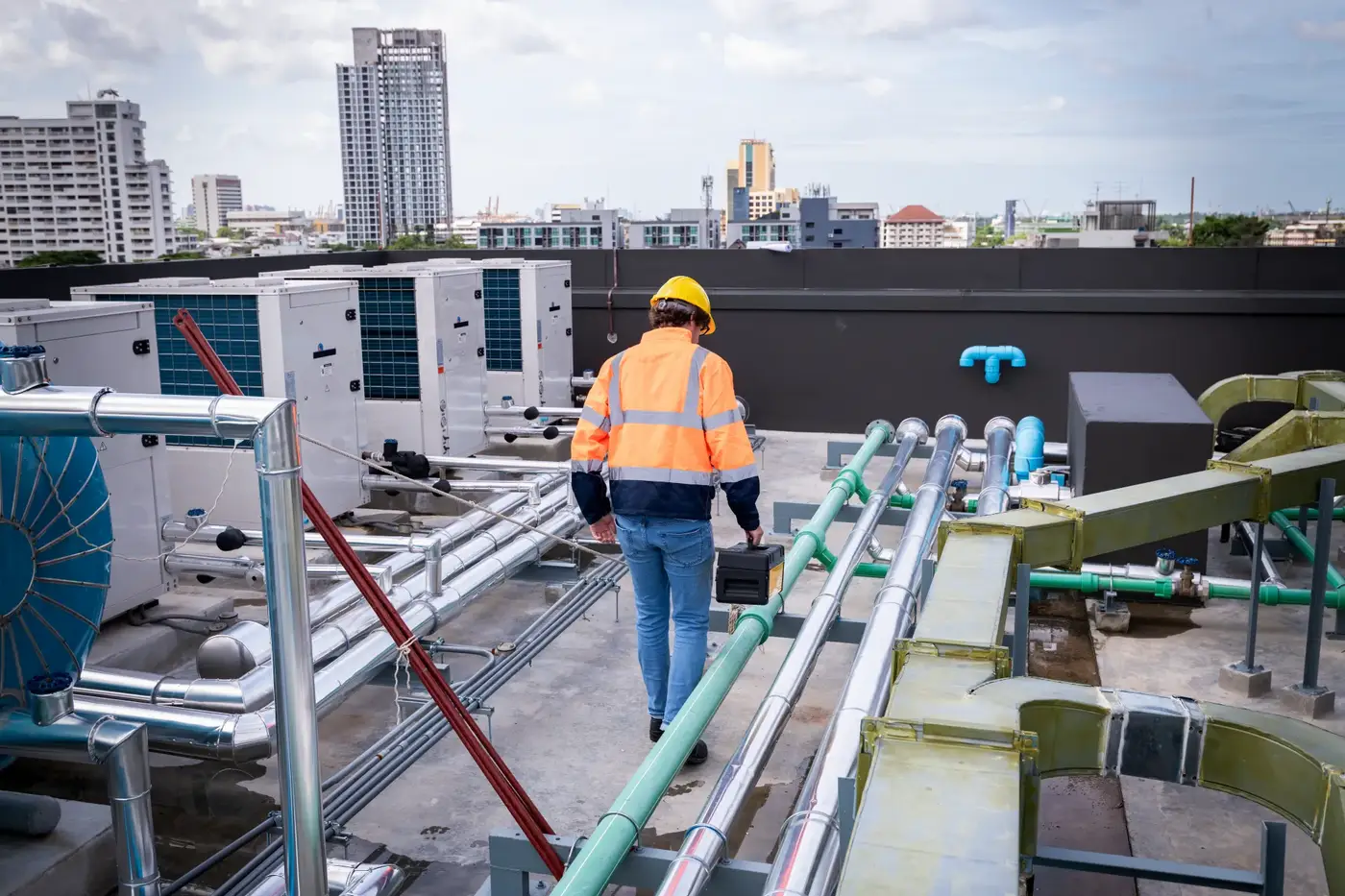
HVAC Safety Regulations Guide
Essential safety regulations and compliance requirements for HVAC systems to ensure safe operation and protect occupants.
Published: January 15, 2026
Reading time: 11 minutes
HVAC safety regulations Toronto Ontario protect building occupants, service technicians, and property from hazardous conditions. TSSA commercial HVAC regulations GTA compliance with federal, provincial, and local codes is mandatory and ensures systems operate safely throughout their lifecycle. Property managers and building engineers must understand Ontario Building Code HVAC compliance requirements and maintain documentation to demonstrate compliance during inspections and audits. For the latest regulatory guidance, visit the TSSA directly.
Federal Safety Standards and Requirements
CSA Standards form the foundation of HVAC safety regulations in Canada. CSA B149.1 Natural Gas and Propane Installation Code governs fuel-burning equipment installation, venting, and combustion air requirements. CSA B52 Mechanical Refrigeration Code provides building safety standards for refrigeration equipment, refrigerant handling, and pressure vessel safety. Review our guide on HVAC regulations compliance for a detailed breakdown of how these codes apply to GTA commercial properties.
Workplace Hazardous Materials Information System (WHMIS) regulates handling and storage of refrigerants, oils, and other hazardous chemicals used in HVAC systems. Technicians must be WHMIS certified and maintain Safety Data Sheets (SDS) for all chemicals on-site. Proper labeling prevents accidental mixing of incompatible substances during maintenance.
Refrigerant Handling Regulations — key commercial HVAC refrigerant regulations Ontario buildings must follow — under the Canadian Environmental Protection Act require technicians to hold Ozone Depleting Substances (ODS) certification. Only certified personnel can recover, recycle, or dispose of refrigerants. Records must be maintained for refrigerant additions and removals—failure to comply results in significant fines.
Ontario-Specific HVAC Safety Regulations
The Technical Standards and Safety Act (TSSA) governs fuel-fired equipment in Ontario. TSSA inspectors examine boilers, furnaces, water heaters, and fuel oil systems to ensure compliance with safety codes. Property managers must maintain valid TSSA certificates and display inspection reports where equipment is installed.
Ontario Building Code (OBC) establishes minimum requirements for HVAC system design and installation. OBC Book Division 6 covers heating, ventilating, and air-conditioning systems. Requirements include minimum ventilation rates, combustion air provisions, exhaust system requirements, and equipment clearances for service access.
Ontario Fire Code addresses fire safety aspects of HVAC systems. Requirements include fire dampers at duct penetrations of fire-rated assemblies, smoke control systems in high-rise buildings, and fire suppression system integration with HVAC operation. Fire dampers must be tested annually to ensure proper operation.
WSIB Coverage Requirements are critical for any HVAC work performed in Ontario. The Workplace Safety and Insurance Board requires employers in the construction and mechanical trades to carry active WSIB coverage for all workers on-site. Property managers and condo boards must verify that every HVAC contractor provides a current WSIB clearance certificate before allowing work to proceed. Without valid WSIB coverage, the building owner or condo corporation could be held liable for workplace injuries sustained by contractor employees.
WSIB HVAC contractor requirements GTA property management companies enforce include strict contractor qualification processes requiring WSIB clearance certificates, proof of TSSA registration, current trade licenses, and minimum insurance levels before any vendor is added to the approved contractor list. This due diligence protects the condo corporation from regulatory and financial exposure while ensuring that only qualified, insured professionals work on building systems.
High-Rise Building Specific Requirements under the Ontario Building Code and Fire Code impose additional safety obligations on buildings exceeding a certain height. Smoke control systems must be designed to prevent smoke migration between floors during a fire event, typically using stairwell pressurization, vestibule pressurization, or floor-by-floor exhaust systems. These systems interact directly with the HVAC infrastructure — make-up air units, corridor pressurization fans, and exhaust systems must all be integrated with the fire alarm panel to automatically switch to smoke control mode when an alarm is triggered.
Annual testing of smoke control systems is mandatory, and HVAC contractors performing this testing must coordinate with the fire alarm monitoring company and local fire department. In GTA condo towers, these tests are typically conducted during off-peak hours to minimize disruption, but residents must be notified in advance as the testing involves activating building alarms and temporarily shutting down normal HVAC operation.
Electrical Safety and Compliance Requirements
Electrical Safety Authority (ESA) oversees electrical installations in Ontario. All HVAC equipment installations require ESA permits and inspections. Improper electrical connections cause fires, equipment damage, and technician injuries. Grounding and bonding requirements must be strictly followed—water lines, gas piping, and ductwork may require bonding to prevent electrical potential differences.
Lockout/Tagout (LOTO) procedures protect technicians during maintenance. Before any service work, equipment must be de-energized, locked, and tagged to prevent accidental startup. Properties must maintain LOTO procedures and provide locks, tags, and training for maintenance staff. Multiple locks on group lockout boxes accommodate technicians working simultaneously.
Arc flash protection requires electrical panels to be labeled with arc flash incident energy levels. Technicians must wear appropriate Personal Protective Equipment (PPE) based on available fault current. Regular electrical maintenance including infrared scanning identifies loose connections and overheating components before failure occurs.
Confined space entry regulations apply to many HVAC maintenance activities in commercial buildings. Boiler fireboxes, large ductwork sections, cooling tower basins, and underground mechanical vaults may all be classified as confined spaces under Ontario's Occupational Health and Safety Act. Before entering a confined space, a qualified person must conduct an atmospheric assessment to check for oxygen deficiency, combustible gases, and toxic substances. An entry permit system documents the hazards present, the precautions taken, and the rescue plan in place.
At least one trained attendant must remain outside the confined space to monitor the entrant and initiate rescue procedures if needed. Many GTA condo buildings have mechanical rooms or equipment vaults that meet the confined space definition, and property managers must ensure that their HVAC contractors have the training, equipment, and procedures necessary to perform confined space entry safely. This includes atmospheric monitoring instruments, forced air ventilation equipment, communication devices, and rescue equipment appropriate to the specific space.
Refrigerant Safety and Environmental Regulations
Refrigerant transition from high-GWP refrigerants to low-GWP alternatives impacts system operation and Ontario compliance. R-410A operates at significantly higher pressures than R-22—technicians need different equipment and training. New refrigerants like R-454B have mild flammability (A2L) classifications requiring additional safety precautions during handling. When refrigerant incidents occur outside business hours, our emergency HVAC services team is available around the clock to respond safely and in accordance with all HVAC safety regulations.
Refrigerant leak detection is mandatory for systems containing 50+ pounds of refrigerant. EPA regulations (in force in Canada) require leak rate calculations and repairs when leak rates exceed thresholds. Install fixed leak detectors in equipment rooms with automatic shutoff valves to prevent large releases.
Pressure vessel safety requires regular inspection of refrigerant receivers, condensers, and evaporators operating under pressure. CSA B52 requires pressure relief devices sized correctly and piped to safe discharge locations. Annual testing of pressure relief valves prevents dangerous overpressure conditions.
Ventilation and Indoor Air Quality Requirements
ASHRAE Standard 62.1 provides minimum ventilation requirements for acceptable indoor air quality. Toronto building code adopts ASHRAE 62.1 requirements for outdoor air delivery rates. CO2 sensors in densely occupied spaces trigger increased ventilation when concentrations exceed 1000 ppm—maintaining acceptable air quality while minimizing energy consumption.
Exhaust system requirements remove contaminants from occupied spaces. Commercial kitchens, laboratories, parking garages, and washrooms require dedicated exhaust systems. Make-up air must be provided to replace exhausted air—otherwise negative pressure causes backdrafting of combustion equipment or infiltration of outdoor contaminants.
Filtration and air cleaning requirements protect occupants from airborne contaminants. Minimum Efficiency Reporting Value (MERV) ratings specify filter performance—higher MERV ratings capture smaller particles but increase pressure drop. Ontario healthcare facilities require HEPA filtration in specific applications to prevent pathogen transmission.
Carbon monoxide detection is required in all Ontario residential buildings under the Ontario Fire Code, including condo towers with fuel-fired HVAC equipment. CO detectors must be installed near all sleeping areas and on each level of the building that has a fuel-burning appliance or an attached garage. In multi-unit residential buildings with central boiler plants, CO detection systems in mechanical rooms must be connected to the building's fire alarm panel and configured to shut down fuel-burning equipment when dangerous CO levels are detected.
Property managers must test these detection systems regularly and replace detectors according to manufacturer specifications, typically every five to seven years. Building-wide CO alarm events — which can be triggered by malfunctioning boilers, blocked flue pipes, or negative pressure conditions in mechanical rooms — require immediate investigation by a TSSA-certified technician and may necessitate building evacuation until the source is identified and corrected.
Mechanical Room Safety Requirements
Equipment access clearances ensure safe maintenance access. Building codes require minimum clearances around equipment—typically 30 inches in front of control sides, 18 inches on service sides, and 24 inches for appliances requiring burner removal. Blocked access creates safety hazards for technicians and often results in failed inspections.
Combustion air requirements prevent dangerous oxygen depletion. Fuel-burning equipment requires adequate air for combustion and ventilation. Enclosed mechanical rooms need two permanent openings—one near the ceiling, one near the floor—to provide natural draft ventilation. Mechanical combustion air systems with interlocks shut down equipment if airflow is interrupted.
Refrigerant monitoring in equipment rooms detects leaks before concentrations reach hazardous levels. Chlorine-containing refrigerants decompose into phosgene gas when exposed to high temperatures from fires or electrical failures. Install refrigerant detectors connected to alarm systems and ventilation exhaust in rooms containing large refrigerant charges. For GTA buildings with large chiller plants, mechanical room ventilation systems must be sized to dilute potential refrigerant releases to below the threshold limit value (TLV) specified in CSA B52.
Maintenance Documentation and Inspection Requirements
TSSA inspections occur annually for fuel-fired equipment as part of mandatory building safety standards. Independent TSSA-certified inspectors examine boilers, pressure vessels, and fuel-burning appliances. Keep inspection reports readily available for review. Outstanding deficiencies must be addressed within specified timeframes—unresolved violations result in equipment shutdown orders. When deficiencies require immediate repair, our commercial HVAC repair team can respond quickly to restore Ontario compliance.
Preventive maintenance records demonstrate ongoing compliance. Document all maintenance activities including filter changes, belt replacements, lubrication, cleaning, and performance testing. Maintenance records provide evidence of due diligence during investigations and support warranty claims when equipment fails prematurely.
Contractor certification verification ensures only qualified personnel work on systems. Request copies of trade licenses, TSSA certifications, ODS cards, and ESA authorization certificates from all HVAC contractors. Maintain a list of approved contractors with current certifications for emergency service and planned maintenance work.
Cooling tower safety requires specific attention in GTA high-rise buildings with water-cooled chiller systems. Ontario Regulation 332/12 under the Health Protection and Promotion Act mandates comprehensive Legionella management programs for all cooling towers. Building owners must register their cooling towers with the local public health unit, implement a water management plan developed by a qualified water treatment professional, conduct regular water testing for Legionella bacteria, and maintain detailed records of all treatment activities and test results. Failure to comply can result in orders from public health inspectors and potential liability if occupants or neighbouring buildings are exposed to contaminated drift.
HVAC contractors performing cooling tower maintenance must follow safe work practices including respiratory protection when cleaning cooling tower basins, proper fall protection when working on elevated tower structures, and lockout/tagout procedures when servicing fans and pumps. The combination of biological hazards, working at heights, and rotating equipment makes cooling tower maintenance one of the higher-risk HVAC activities in commercial buildings.
100%
Mandatory compliance requirement
$50K+
Fines for non-compliance
Annual
TSSA inspection frequency
Key Takeaways
- Maintain current TSSA certificates and ESA inspection approvals for all fuel-fired equipment
- Only ODS-certified technicians may handle refrigerants in Canada
- Implement lockout/tagout procedures for all maintenance activities
- Document all maintenance activities and maintain inspection records on-site
Related Topics
Need Help with Safety Compliance?
Our certified technicians ensure your HVAC systems meet all federal, provincial, and municipal safety regulations.
Schedule Compliance Inspection