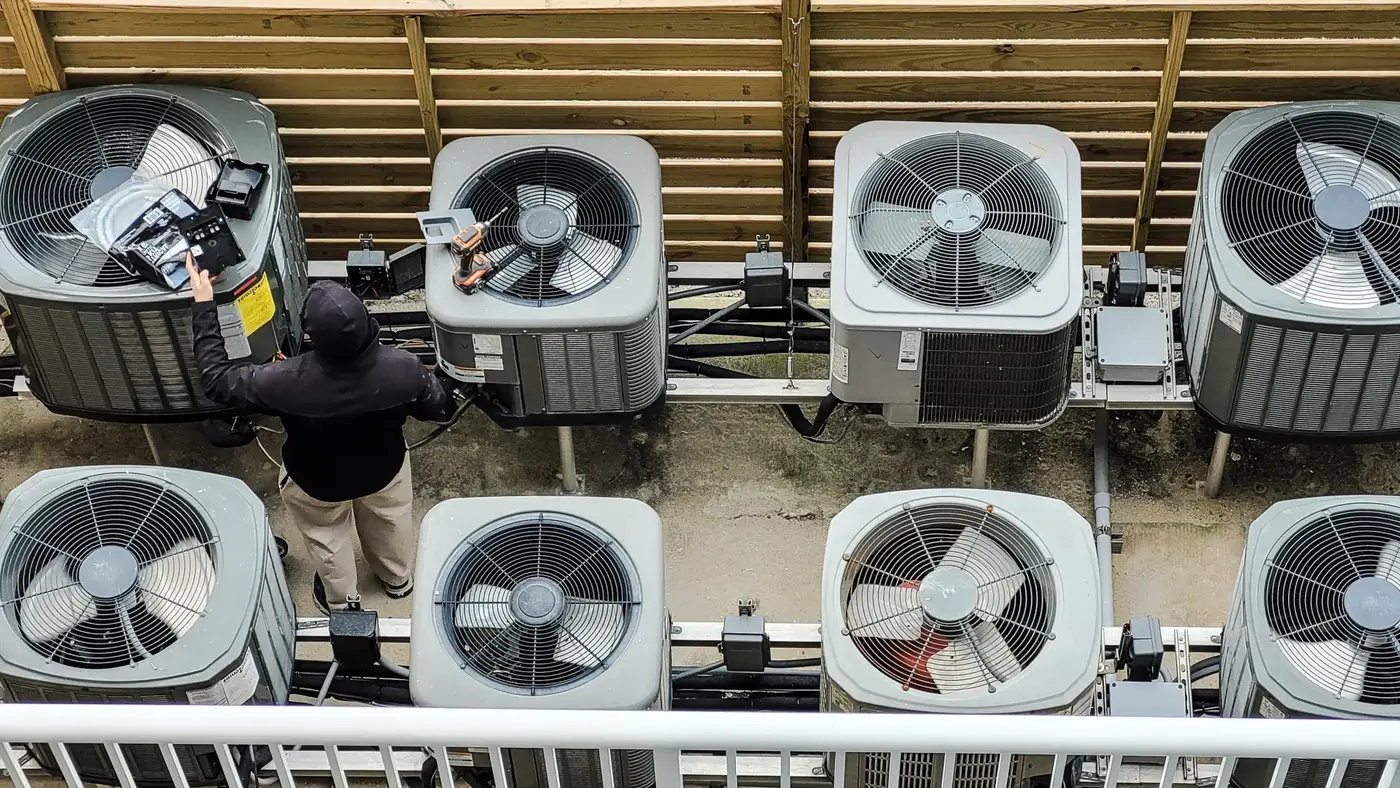
HVAC Maintenance Best Practices
Proven strategies and best practices for maintaining commercial HVAC systems to maximize efficiency, reduce costs, and extend equipment life.
Following HVAC maintenance best practices commercial Toronto building operators apply requires systematic approaches that combine preventive, predictive, and corrective strategies to optimize system performance while controlling costs. This guide provides property managers and building engineers with proven approaches for maintaining commercial HVAC systems, establishing maintenance programs, and maximizing return on investment.
Preventive Maintenance Fundamentals
A solid preventive HVAC maintenance program GTA property teams develop forms the foundation of effective operations, addressing potential problems before they cause failures or efficiency losses. Consistent preventive activities dramatically reduce emergency repairs and extend equipment life. Learn more about HVAC maintenance packages tailored to your building type.
Filter Maintenance represents one of the most critical preventive maintenance tasks with immediate impact on system performance and efficiency. Key practices include:
- Establish filter inspection schedules based on building occupancy and environmental conditions rather than arbitrary time intervals
- Monitor pressure drop across filter banks to determine optimal replacement timing
- Use proper MERV-rated filters matched to system capabilities and application requirements
- Document filter replacements to track service life and optimize replacement intervals
- Consider pre-filtration strategies to extend final filter life in challenging environments
Belt and Coupling Inspections prevent unexpected failures and maintain efficient power transmission. Inspect belts monthly for cracks, fraying, glazing, or improper tension. Replace belts in matched sets to ensure balanced loading. Check alignment between motor and driven equipment to prevent premature belt wear and bearing failure. Lubricate bearings according to manufacturer specifications, using proper lubricant types and quantities. Document belt replacements to identify patterns that might indicate underlying problems.
Coil and Heat Transfer Surface Maintenance maintains efficient heat transfer and prevents performance degradation. Clean condenser and evaporator coils quarterly to remove dirt and debris that reduces efficiency. Inspect coil fins for damage and straighten bent fins to maintain proper airflow. Check for refrigerant leaks that can indicate coil corrosion developing. Clean heat exchanger surfaces in boilers and water heaters annually to maintain efficiency. Inspect cooling tower fill and distribution systems for proper operation.
Predictive Maintenance Technologies
A commercial HVAC service schedule Toronto buildings optimize with predictive maintenance technologies enables data-driven decision making that prevents failures before they occur. These technologies transform maintenance from reactive to proactive approaches.
Vibration Analysis detects developing mechanical problems in rotating equipment long before failure occurs. Establish baseline vibration signatures for all major equipment like chillers, pumps, and fans. Monitor vibration trends to identify bearing wear, misalignment, imbalance, or looseness. Schedule repairs based on condition rather than arbitrary intervals, preventing catastrophic failures. Portable vibration analyzers provide cost-effective monitoring for smaller facilities. Continuous monitoring systems protect critical equipment in larger properties.
Oil Analysis provides early warning of equipment problems through fluid condition monitoring. Sample oil from compressors, gearboxes, and hydraulic systems quarterly to detect contamination, wear particles, or chemical breakdown. Analysis identifies bearing wear, gear deterioration, and seal leaks before they cause equipment failure. Trend oil condition over time to predict maintenance requirements and schedule repairs conveniently. Analysis costs are minimal compared to prevented equipment damage and downtime.
Infrared Thermography identifies thermal anomalies indicating developing problems. Scan electrical panels, motor terminations, and disconnects annually to detect loose connections or overload conditions before they cause failures. Inspect building envelopes for heat loss that might indicate insulation problems or air leakage. Check heat exchanger temperatures to identify fouling or flow restrictions. Thermal imaging detects problems that aren't visible during visual inspections, providing early warning of developing issues. According to ASHRAE standards, predictive maintenance technologies can reduce unplanned downtime by up to 35%.
Control System Maintenance
Implementing predictive HVAC maintenance commercial buildings GTA engineers recommend extends system life and reduces unplanned failures. Modern HVAC systems rely heavily on sophisticated controls that require specialized maintenance to ensure proper operation. Control system problems often cause significant energy waste without obvious equipment failures.
Sensor Calibration and Verification ensures control systems have accurate data for decision-making. Calibrate temperature sensors annually against certified reference thermometers. Verify humidity sensors using salt calibration or electronic calibrators. Check pressure and airflow sensors against reference instruments. Test outdoor air temperature sensors annually, as they're exposed to weather conditions that affect accuracy. Document calibration results and replace sensors that can't be calibrated to acceptable accuracy.
Control Sequence Verification confirms equipment operates as intended rather than causing conflicts that waste energy. Test seasonal changeover procedures to ensure proper operation during heating and cooling seasons. Verify economizer operation provides free cooling when conditions permit. Check for simultaneous heating and cooling that indicates control problems. Test setback schedules to confirm equipment operates properly during occupied and unoccupied periods. Verify equipment sequencing operates components in proper order for maximum efficiency.
Actuator and Linkage Maintenance ensures control commands translate to proper equipment response. Inspect valve and damper actuators for proper operation through full stroke range. Check linkages for looseness or binding that prevents precise control. Lubricate linkages and pivot points per manufacturer recommendations. Verify tightness of valve packing and damper seals to prevent leakage. Test actuators under load conditions to ensure they have adequate torque throughout the operating range.
Refrigerant System Management
Following an HVAC maintenance checklist property managers Toronto teams use ensures refrigerant system compliance and efficient cooling operation. Refrigerant management requires specialized knowledge and careful record-keeping.
Refrigerant Leak Testing prevents environmental releases and maintains system efficiency. Perform annual leak testing in accordance with environmental regulations using approved detection methods. Document test results and maintain records as required by law. Repair any leaks immediately, regardless of size, to prevent environmental impact and efficiency loss. Monitor refrigerant charges over time to identify slow leaks before they become major problems. Implement automated leak detection for large systems to provide continuous monitoring.
Refrigerant Management ensures proper handling and documentation of refrigerants. Maintain refrigerant usage logs showing additions and removals from systems. Use recovery equipment during service to prevent venting refrigerant to atmosphere. Verify technician certification for handling refrigerants according to environmental regulations. Source refrigerants from reputable suppliers to prevent contamination problems. Consider refrigerant alternatives when replacing equipment to future-proof against environmental regulation changes.
Compressor Maintenance protects the most expensive and critical component in refrigeration systems. Monitor compressor operating conditions including suction and discharge pressures, temperatures, and oil pressure. Perform regular oil analysis to detect bearing wear or contamination. Check motor winding resistance and insulation resistance annually. Verify proper superheat and subcooling to ensure efficient operation. Address compressor problems immediately to prevent catastrophic failure that can damage other system components.
Water System Maintenance
Water-side systems require specialized maintenance to maintain heat transfer efficiency and prevent equipment damage. Neglected water systems can cause significant efficiency losses and equipment failures.
Water Treatment Programs prevent scale, corrosion, and biological growth that reduce efficiency and damage equipment. Implement comprehensive water treatment for chilled water, condenser water, and boiler systems. Monitor water chemistry parameters weekly including pH, conductivity, and inhibitor levels. Maintain proper treatment chemical levels through continuous feed or regular dosing. Use corrosion coupons to monitor system corrosion rates. Adjust treatment programs seasonally to account for changing operating conditions.
Heat Exchanger Maintenance maintains efficient heat transfer and prevents performance degradation. Clean heat exchanger tubes and surfaces annually to remove scale and fouling. Perform eddy current testing on chiller tubes to identify tube wall thinning or defects. Inspect gaskets and sealing surfaces for leakage during maintenance. Replace tube bundles rather than entire heat exchangers when possible to reduce replacement costs. Document cleaning results to track fouling rates and optimize maintenance intervals.
Cooling Tower Maintenance ensures reliable heat rejection and efficient chiller operation. Clean cooling tower fill and eliminate biofilm that reduces heat transfer. Treat circulating water to control Legionella and other biological growth. Inspect fans, gearboxes, and motors for proper operation and wear. Verify proper water distribution across fill to prevent hot spots that reduce performance. Perform thorough cleaning and inspection annually, with more frequent service in dusty environments.
Best Practices for GTA Condo Tower HVAC Maintenance
Property management companies and condo boards operating multi-unit residential towers across the Greater Toronto Area benefit from commercial HVAC maintenance best practices specifically adapted to the challenges of high-rise buildings in Ontario's climate. HVAC Touch works with property managers throughout the GTA to implement maintenance programs that address the unique requirements of condo tower mechanical systems, including preventive maintenance checklist items that coordinate suite access across hundreds of fan coil units, central plant maintenance schedules that align with Ontario's TSSA inspection requirements for gas-fired boilers and pressure vessels, and cooling tower water treatment programs that comply with provincial Legionella prevention regulations. Our TSSA-certified technicians and WSIB-covered workforce provide the credentials and expertise that property management companies require when selecting maintenance partners for their building portfolios.
Maintenance Responsibility Boundaries
A critical best practice for GTA condo buildings involves establishing clear maintenance responsibility boundaries between the condo corporation and individual unit owners. The declaration and bylaws of each condominium corporation define which HVAC components are common elements maintained by the corporation and which are unit components maintained by individual owners. In most GTA condos, the central boiler and chiller plant, distribution piping risers, and corridor ventilation systems are common elements, while individual suite fan coil units and thermostats may be designated as unit owner responsibility. Property managers should ensure that maintenance programs clearly address both common element and unit-level maintenance, providing comprehensive building-wide coverage regardless of ownership responsibility designation. HVAC Touch offers both building-wide maintenance programs contracted through condo corporations and individual suite maintenance services that unit owners can access directly, ensuring complete coverage across all building HVAC components.
Documentation and Program Management
Effective maintenance programs require comprehensive documentation and systematic management to ensure consistency and continuous improvement.
Equipment Records and History provide valuable information for maintenance planning and decision-making. Maintain complete equipment files including original specifications, installation manuals, and commissioning reports. Document all maintenance activities including inspections, repairs, and replacements. Track equipment performance data including energy consumption and operating parameters. Record equipment problems and root causes to identify recurring issues. Use historical data to optimize maintenance intervals and predict replacement needs.
Maintenance Scheduling and Tracking ensures no tasks fall through the cracks. Implement computerized maintenance management systems (CMMS) to schedule and track all maintenance activities. Generate work orders automatically based on time or usage intervals. Track labor hours and material costs for each piece of equipment. Maintain spare parts inventory to ensure parts availability for scheduled maintenance. Generate reports showing maintenance compliance and costs for management review.
Performance Monitoring and Analysis verifies maintenance effectiveness and identifies improvement opportunities. Track key performance indicators including energy consumption per unit of output, maintenance cost per square foot, and equipment life extension gains. Compare current performance to historical baselines and industry benchmarks. Analyze failure patterns to identify equipment requiring replacement or upgrade. Review maintenance procedures annually and update based on lessons learned. Use performance data to justify maintenance budget requests and demonstrate program value. For buildings seeking deeper optimization, property management HVAC programs provide comprehensive oversight across entire portfolios.
Maintenance Best Practices Impact
reduction in emergency repair frequency through comprehensive preventive maintenance programs
energy savings achieved through proper maintenance vs reactive repair approaches
extended equipment lifespan through proactive maintenance programs
annual maintenance cost for well-maintained commercial HVAC systems
Key Takeaways
- Implement preventive maintenance as the foundation of your program to prevent problems before they cause failures
- Adopt predictive technologies like vibration analysis, oil analysis, and infrared thermography to detect problems early
- Maintain control systems including sensors, actuators, and sequences to ensure efficient equipment operation
- Document everything thoroughly to create equipment history, optimize maintenance intervals, and support decision-making
- Monitor performance continuously to verify maintenance effectiveness and identify improvement opportunities
Related Topics
Preventive Maintenance
Essential maintenance tasks to keep systems running efficiently
Maintenance Plans
Develop comprehensive maintenance plans for your property
Filter Maintenance
Optimize filter selection and maintenance for air quality and efficiency
Condo Building Strategy
Specialized maintenance approaches for condominium properties
Optimize Your Maintenance Program
Our maintenance experts help you implement best practices and develop comprehensive programs that maximize equipment performance and minimize lifecycle costs.