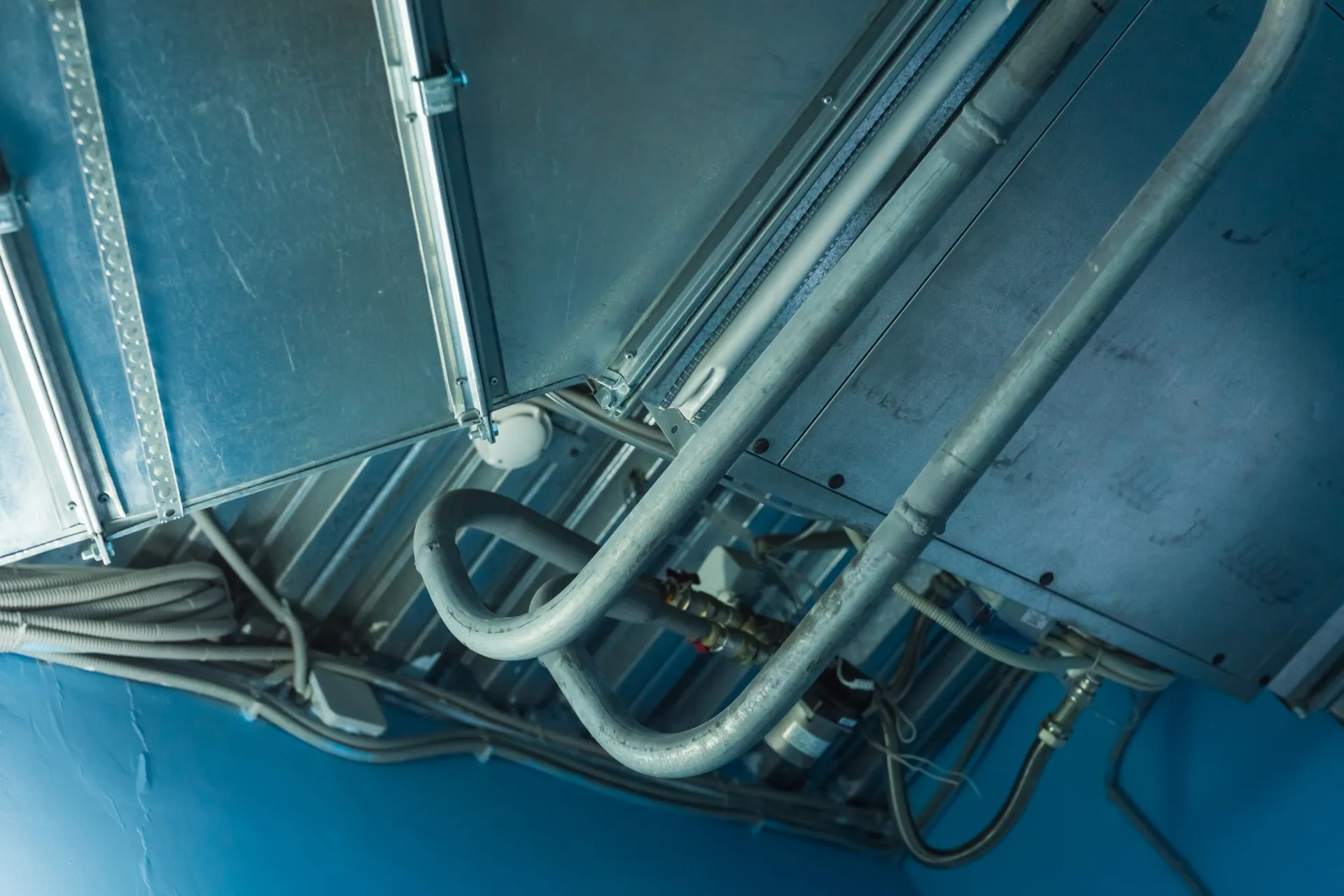
Humidity Control in Commercial Buildings: Solutions for GTA Properties
Humidity control commercial buildings Toronto management is one of the most overlooked aspects of commercial HVAC, yet it significantly impacts HVAC dehumidification condo GTA performance, occupant health, equipment longevity, and building integrity. For properties in the Greater Toronto Area, where humidity levels fluctuate dramatically between humid summers and dry winters, proper humidity management is essential. Our indoor air quality services address humidity as a core component of occupant health in GTA commercial buildings.
Why Humidity Control Matters
Occupant Health and Comfort
Improper humidity levels directly affect building occupants:
- Too High (above 60%): Promotes mold growth, dust mites, and bacteria; increases respiratory issues; creates muggy, uncomfortable conditions.
- Too Low (below 30%): Causes dry skin, irritated eyes, and respiratory discomfort; increases static electricity; damages wooden furnishings.
Building Preservation
- Indoor humidity management Toronto commercial building teams focus on mold prevention: humidity above 60% creates ideal conditions for mold growth, which can cause structural damage and health hazards.
- Material Protection: Wood, drywall, and materials expand/contract with humidity changes, causing warping and damage.
- Electronics Protection: Low humidity increases static discharge risk to sensitive equipment.
Energy Efficiency
Proper humidity management — including commercial HVAC humidifier installation GTA and dehumidification systems — allows for higher thermostat settings in summer and lower settings in winter, reducing energy costs by 5-15%. A professional energy audit services assessment can identify humidity-related energy waste and recommend targeted equipment upgrades. Learn more from Natural Resources Canada's energy efficiency resources on commercial building performance.
Ideal Humidity Levels by Building Type
| Building Type | Winter RH | Summer RH | Special Considerations |
|---|---|---|---|
| Office Buildings | 30-40% | 40-50% | Equipment protection, static control |
| Condo Buildings | 30-40% | 45-55% | Tenant comfort, mold prevention |
| Data Centers | 40-50% | 45-55% | Tight control, static prevention |
| Healthcare | 30-50% | 40-60% | Infection control, patient comfort |
| Retail Stores | 30-40% | 45-55% | Product preservation, comfort |
| Museums/Libraries | 40-45% | 45-50% | Artifact preservation |
RH = Relative Humidity: The amount of moisture in air relative to the maximum it can hold at that temperature. RH changes with temperature even if actual moisture content stays constant.
GTA Humidity Challenges
Summer: High Humidity
Condo building humidity control HVAC Toronto systems are challenged by Toronto summers that bring consistently high outdoor humidity (often 70-80%+). Summer challenges include:
- Moisture infiltration through doors and loading docks.
- Condensation on cold surfaces (pipes, ductwork, windows)
- Mold growth in damp areas.
- Increased cooling load (humid air feels warmer)
- "Muggy" occupant discomfort
Winter: Extremely Dry Air
Cold winter air holds very little moisture. When heated to indoor temperatures, relative humidity drops dramatically:
- Outdoor air at -10°C and 80% RH becomes ~5% RH when heated to 20°C.
- Static electricity problems increase
- Respiratory irritation for occupants
- Damage to wood furnishings and musical instruments.
- Increased perception of cold (dry air feels cooler)
Shoulder Seasons: Rapid Changes
Spring and fall bring dramatic day-to-day humidity swings, challenging building systems to adapt quickly and maintain consistent conditions.
Humidity Control Equipment
Dehumidification Solutions
Integrated Air Handler Dehumidification
- Cool-Reheat: Overcool air to condense moisture, then reheat to desired temperature.
- Enhanced Dehumidification:_hot gas bypass_ or _subcooling_ for improved moisture removal.
- Dedicated Dehumidification Wheels: Desiccant-coated wheels that remove moisture continuously.
Stand-Alone Dehumidifiers
- Portable units for spot problem areas.
- Duct-mounted whole-building dehumidifiers
- Desiccant dehumidifiers for very low humidity requirements.
Humidification Solutions
Steam Humidifiers
Most effective for large commercial applications:
- Electrode: Electric current through water to create steam (requires clean water)
- Resistive: Heating element boils water (tolerates harder water)
- Steam Injection: Central boiler steam distributed to humidifiers.
Evaporative Humidifiers
- Wetted media systems (lower capacity, lower cost)
- Ultrasonic humidifiers (quiet, clean, limited capacity)
- Fogging systems (specialized applications)
Energy Recovery for Humidity Control
Energy Recovery Ventilators (ERV) transfer both heat and moisture between exhaust and fresh air streams, reducing humidity loads while maintaining ventilation requirements. ERVs are particularly effective in GTA's variable climate. Building operators managing condo building ventilation needs should explore our dedicated condo building ventilation page to understand ERV integration options for high-rise towers.
Preventing Condensation Issues
Condensation occurs when surface temperatures fall below the dew point of surrounding air. Prevention strategies:
Building Design Strategies
- Proper insulation of cold surfaces (pipes, ducts, exterior walls)
- Vapor barriers in correct locations (warm side in winter)
- Thermal breaks at structural connections.
- Adequate air sealing to prevent moist air infiltration.
Operational Strategies
- Maintain indoor humidity below 55% during summer.
- Ensure adequate air movement to prevent stagnant air pockets.
- Maintain slight positive pressure in conditioned spaces.
- Monitor dew point conditions during extreme weather.
Problem Areas to Monitor
- Exterior corners and wall intersections.
- Windows and doors (especially in vestibules)
- Cold water pipes and valves.
- Mechanical rooms and chases
- Parking garage entrances
Seasonal Control Strategies
Summer Dehumidification Strategy
When outdoor humidity exceeds indoor setpoints:
- Activate dedicated dehumidification mode on air handlers.
- Reduce outdoor air intake to minimum (while meeting code requirements)
- Lower supply air temperature to remove moisture.
- Monitor coil capacity (high humidity can reduce capacity)
- Drain condensate lines regularly to prevent backups.
Winter Humidification Strategy
When indoor humidity drops below 30%:
- Activate steam humidifiers in stages to prevent over-humidification.
- Monitor for condensation on windows and cold surfaces.
- Adjust humidification based on outdoor temperature (lower at colder temps to prevent condensation)
- Maintain humidifiers regularly (cleaning, water treatment)
Monitoring and Maintenance
Monitoring Requirements
- Sensors: Install humidity sensors in multiple locations per floor.
- Trending: Track humidity patterns over time to identify issues.
- Alarms: Set up notifications for out-of-range conditions.
- Validation: Regularly calibrate sensors (at least annually)
Maintenance Tasks
- Quarterly: Clean humidifier elements and inspect for mineral buildup.
- Quarterly: Inspect and clean condensate drains.
- Annually: Professional cleaning and calibration of all humidity equipment.
- Annually: Inspect insulation and vapor barriers for damage.
- As needed: Replace desiccant wheels or humidifier elements.
Tenant Communication
Educating building occupants about humidity management helps manage expectations:
- Explain recommended humidity levels and why they matter.
- Provide guidance on reporting humidity issues.
- Communicate seasonal adjustments to humidity targets.
- Explain why condensation occurs on windows during extreme weather.
- Offer tips for managing humidity in individual spaces (suite-level)
Implementing Effective Humidity Control
Proper humidity control is essential for occupant health, building preservation, and energy efficiency. For GTA properties facing dramatic seasonal humidity swings, a comprehensive approach combining proper equipment, monitoring, and maintenance is key.
The first step is a professional assessment of your building's current humidity conditions and challenges. From there, targeted solutions can be designed to address specific issues while balancing energy efficiency.
Contact HVAC Touch for a humidity control assessment including recommendations for equipment upgrades, operational improvements, and maintenance strategies.